Background
What is Fresenius?
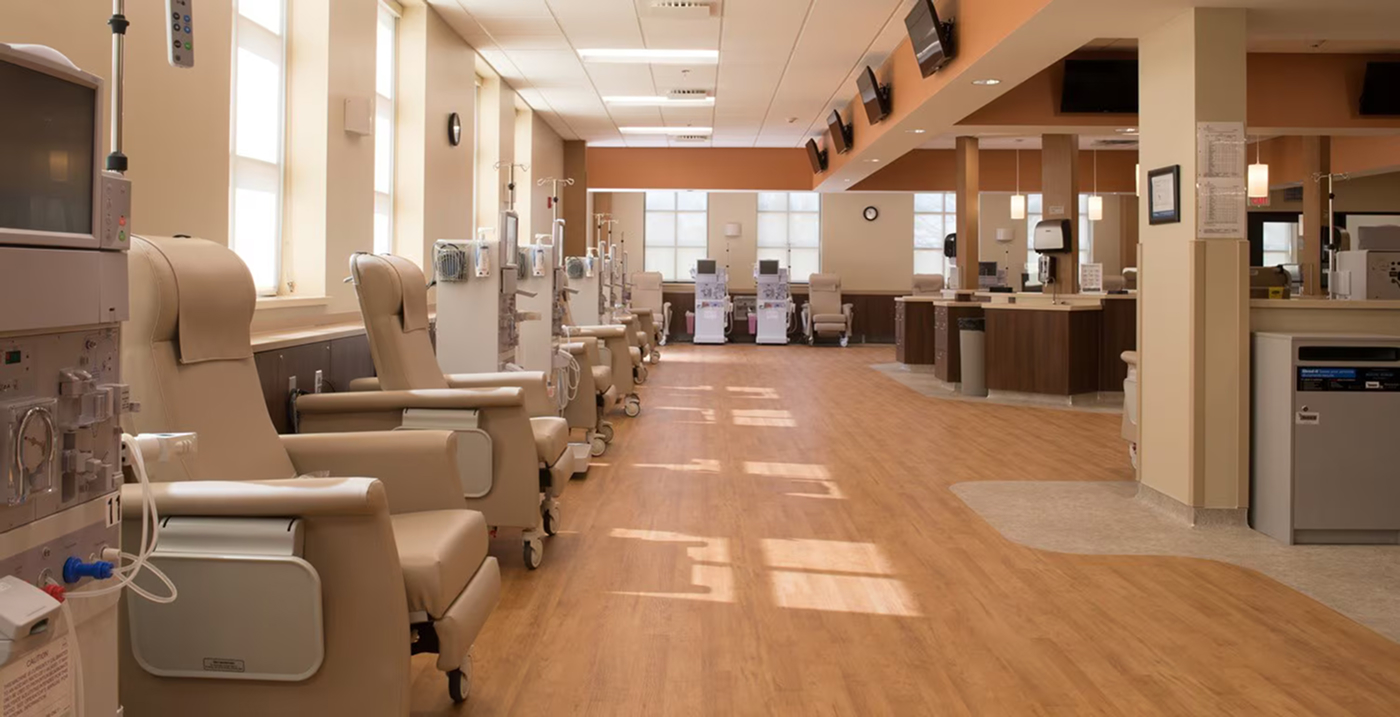
Fresenius provides care and equipment for people with chronic kidney disease (CKD). CKD patients typically spend 3–4 hours, three times a week, at dialysis centers where machines filter their blood to compensate for reduced kidney function.
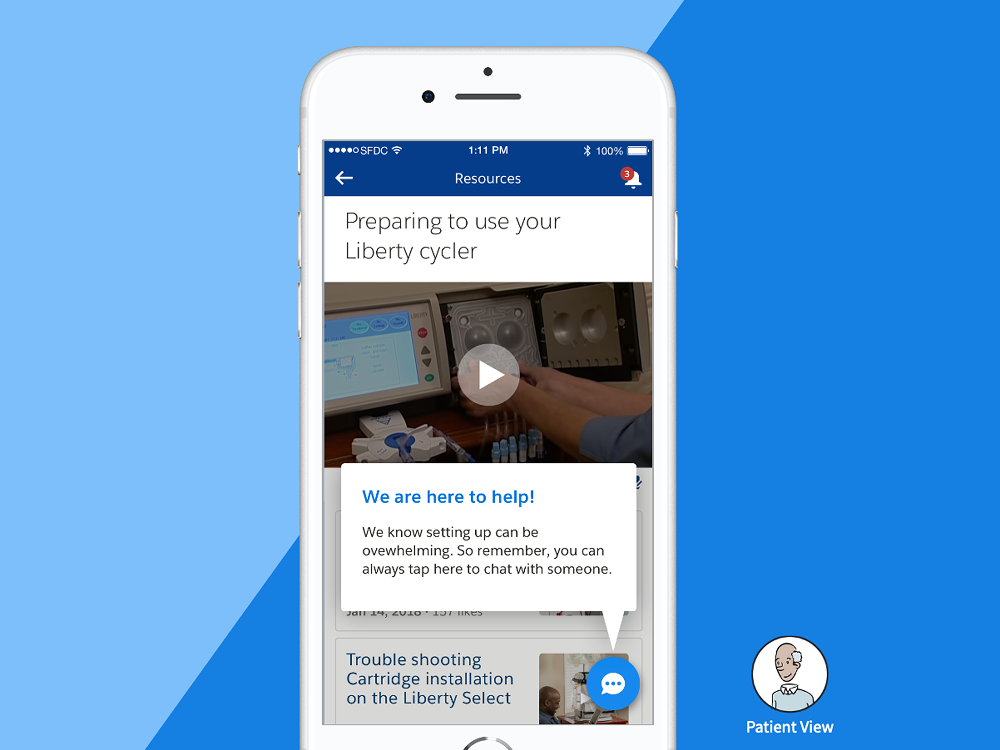
Fresenius also offers an at-home hemodialysis machine that allows patients to perform these treatments without traveling to a clinic. This project focused on improving the patient and nurse experience surrounding the use of this at-home system.
The Goal and Challenge
Fresenius set a goal of growing in home care by 25% in 5 yrs and came to Salesforce for help creating the experience for patients and nurses surrounding in home care that would enable that growth
However, they had a big challenge: about 1/2 the patients that try in home hemodialysis go back to in clinic care within a year. Fresenius would also need hire more than the amount of available nurses in the US to care for the increase in patients at current nurse workloads.
Getting started
Understanding dialysis dynamics
Our team got up to speed with hundreds of Fresenius documents and research showing their current understanding of the challenges. We conducted our own patient and nurse interviews to get a first hand view and different perspective than Fresenius

Research & Discovery
We conducted interviews with 12 patients and 8 nurses to understand pain points in the current at-home dialysis experience. Key findings revealed three critical opportunity areas:
- Education - Patients needed clear, accessible information about their treatment and health status
- Coordination - Care teams struggled to stay aligned on patient preferences and real-time status
- Virtual support - Patients wanted immediate access to help without calling the clinic

Second phase & Final concepts
Current initiatives steer direction
After the sprint, the Fresenius leadership chose Virtual Support to be the sole focus to align with a separate communication center initiative.
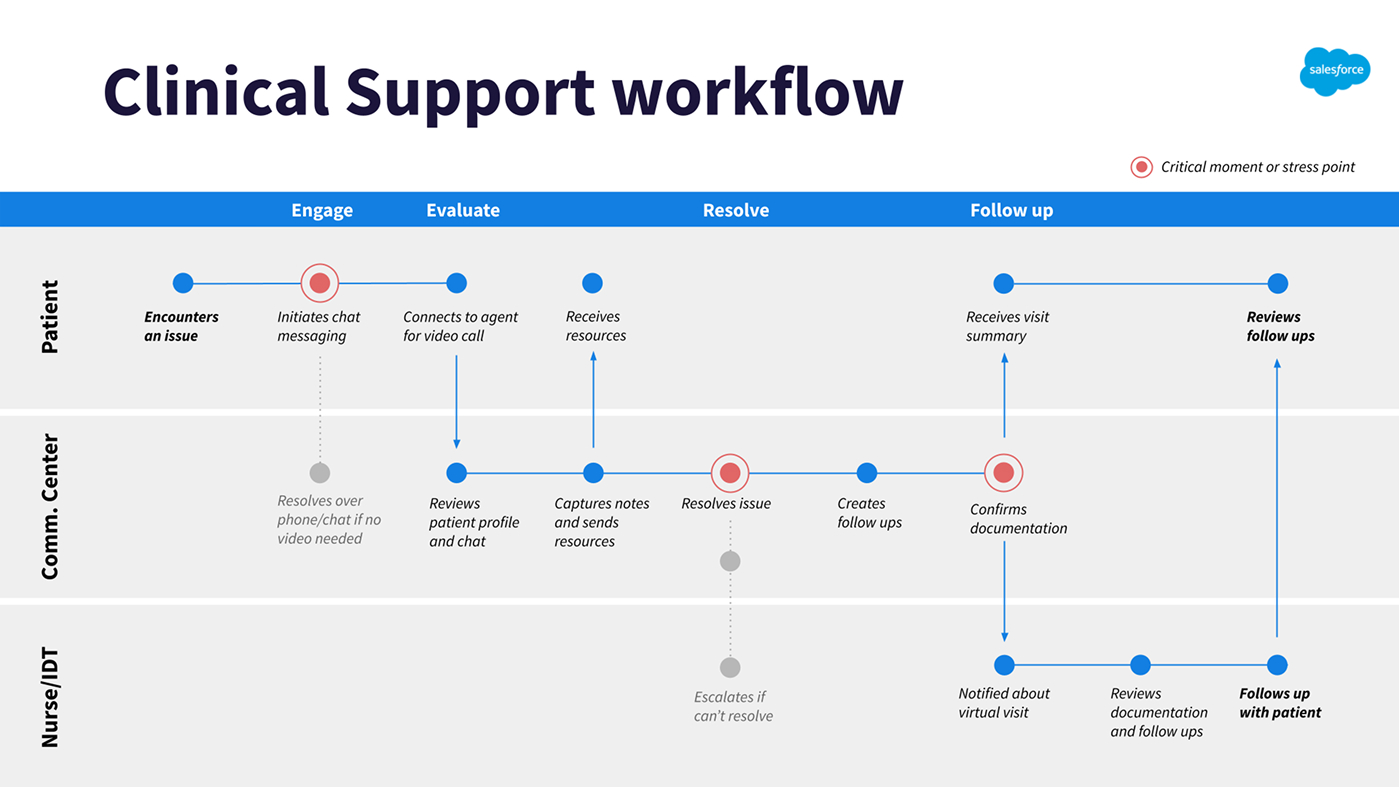
Ultimately, through additional feedback and patient research we built out virtual support into 3 indepth areas: clinical support, supply delivery, and technical troubleshooting, each with its own set of features and workflows showing the process for support and who would be involved in each step.
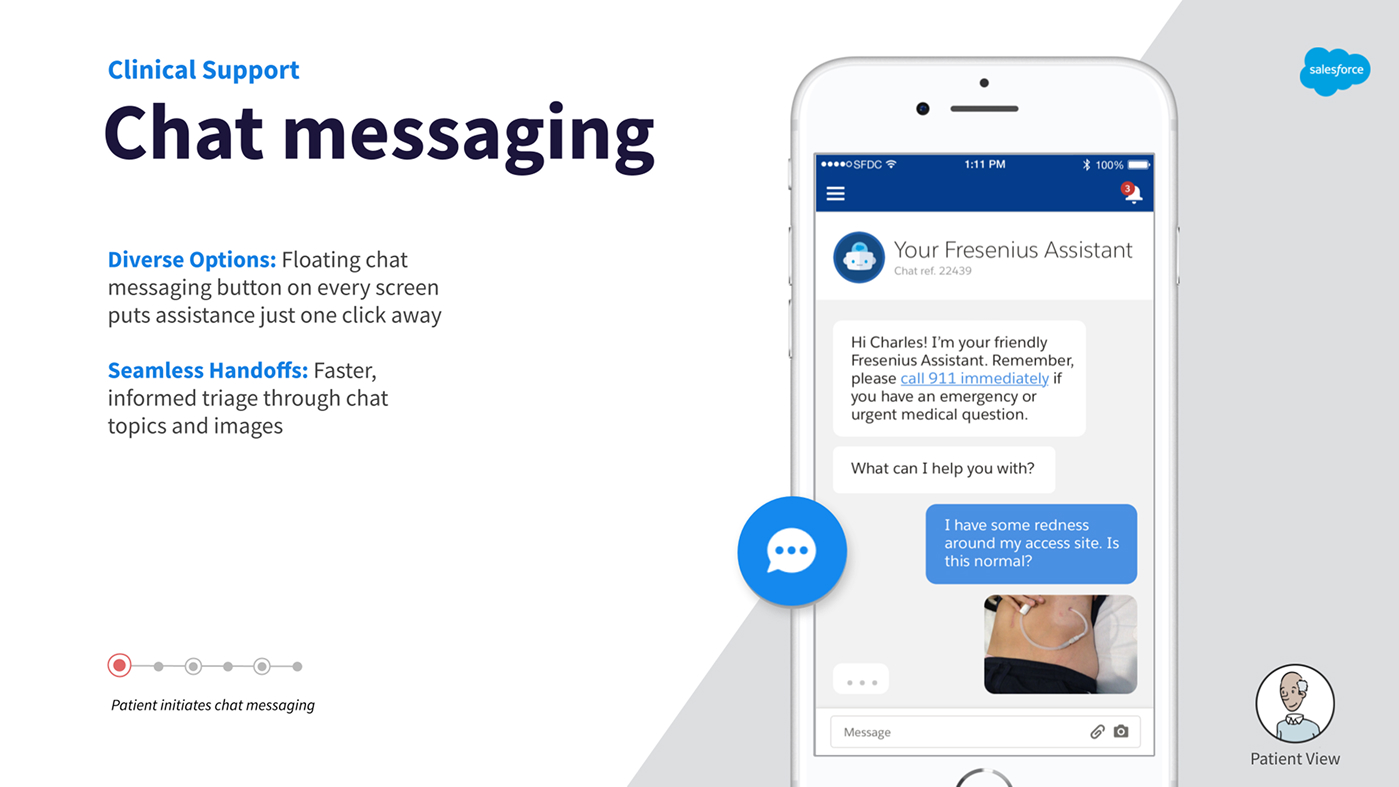
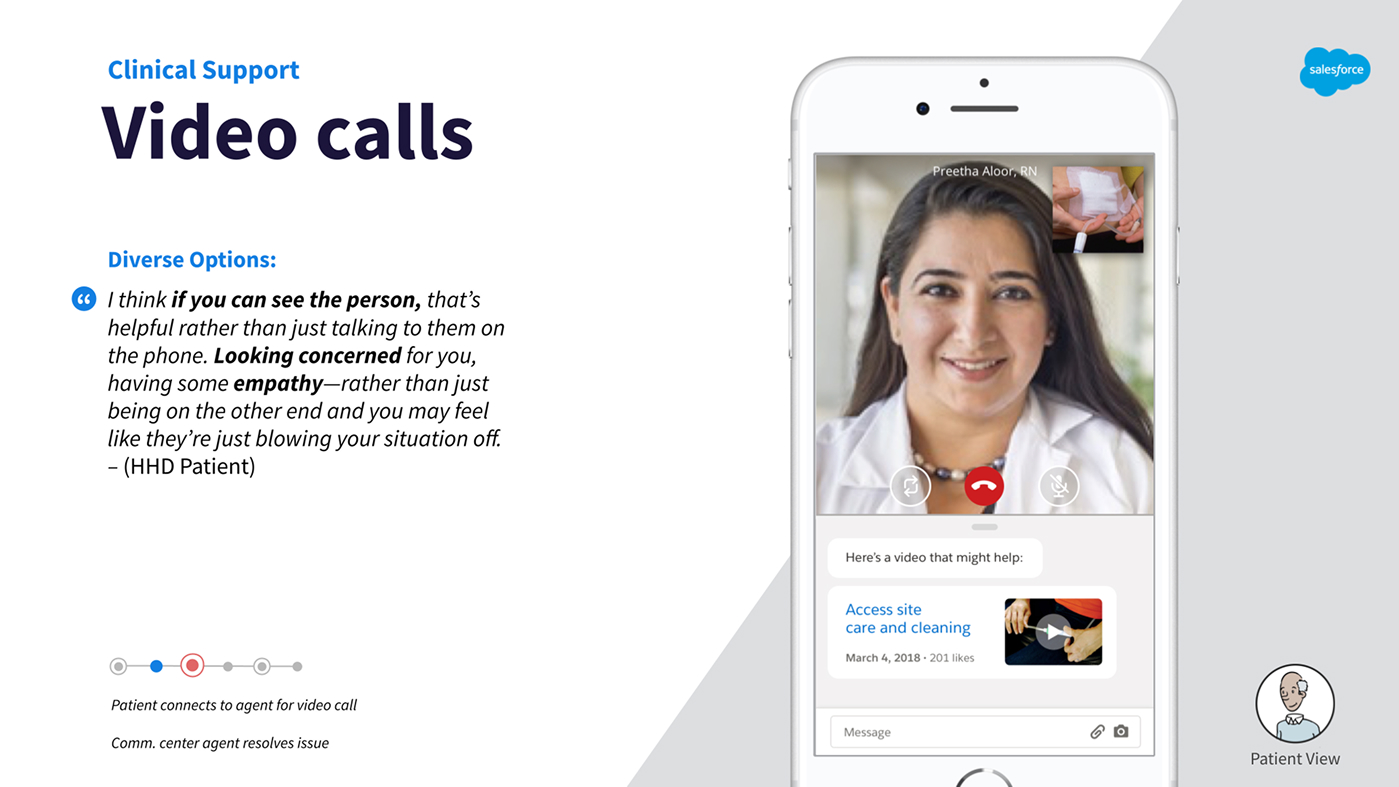
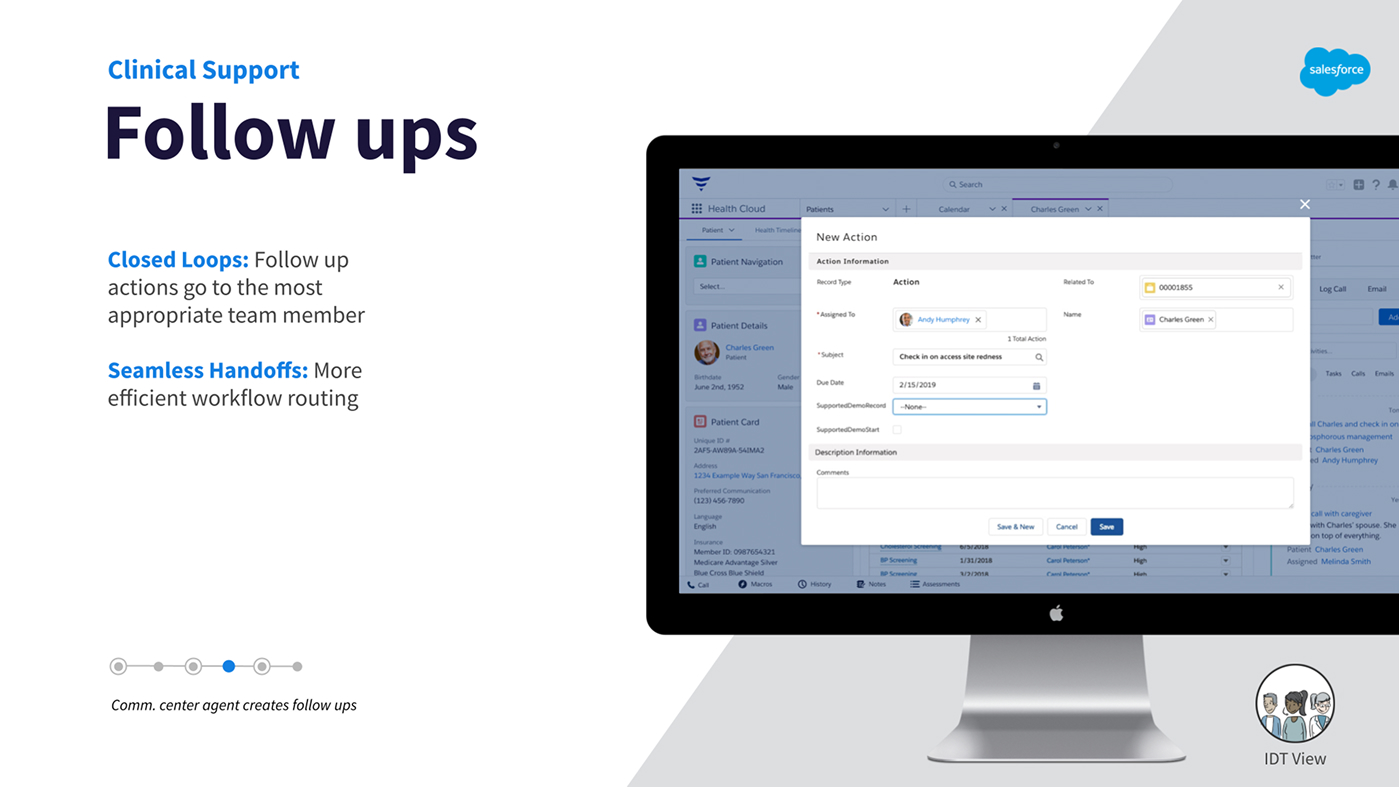
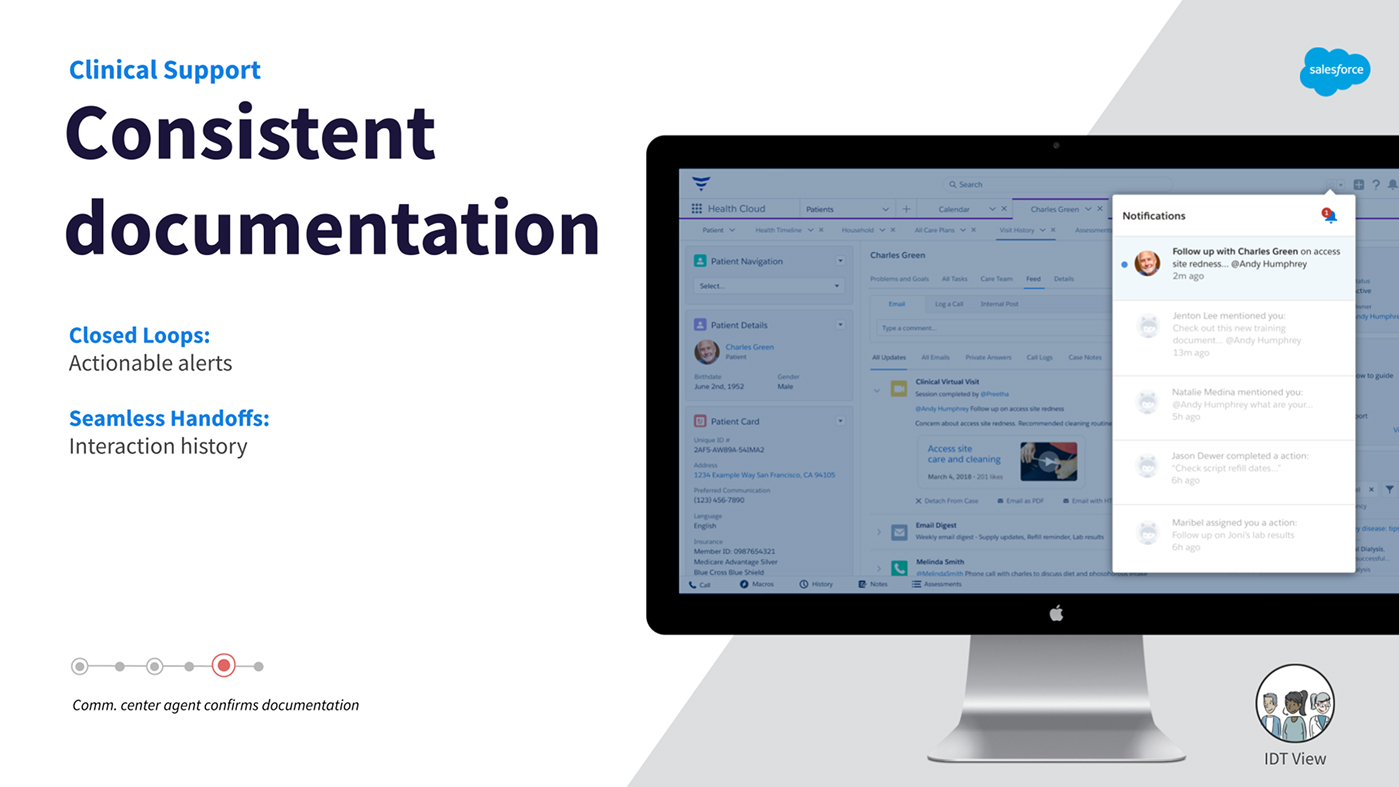
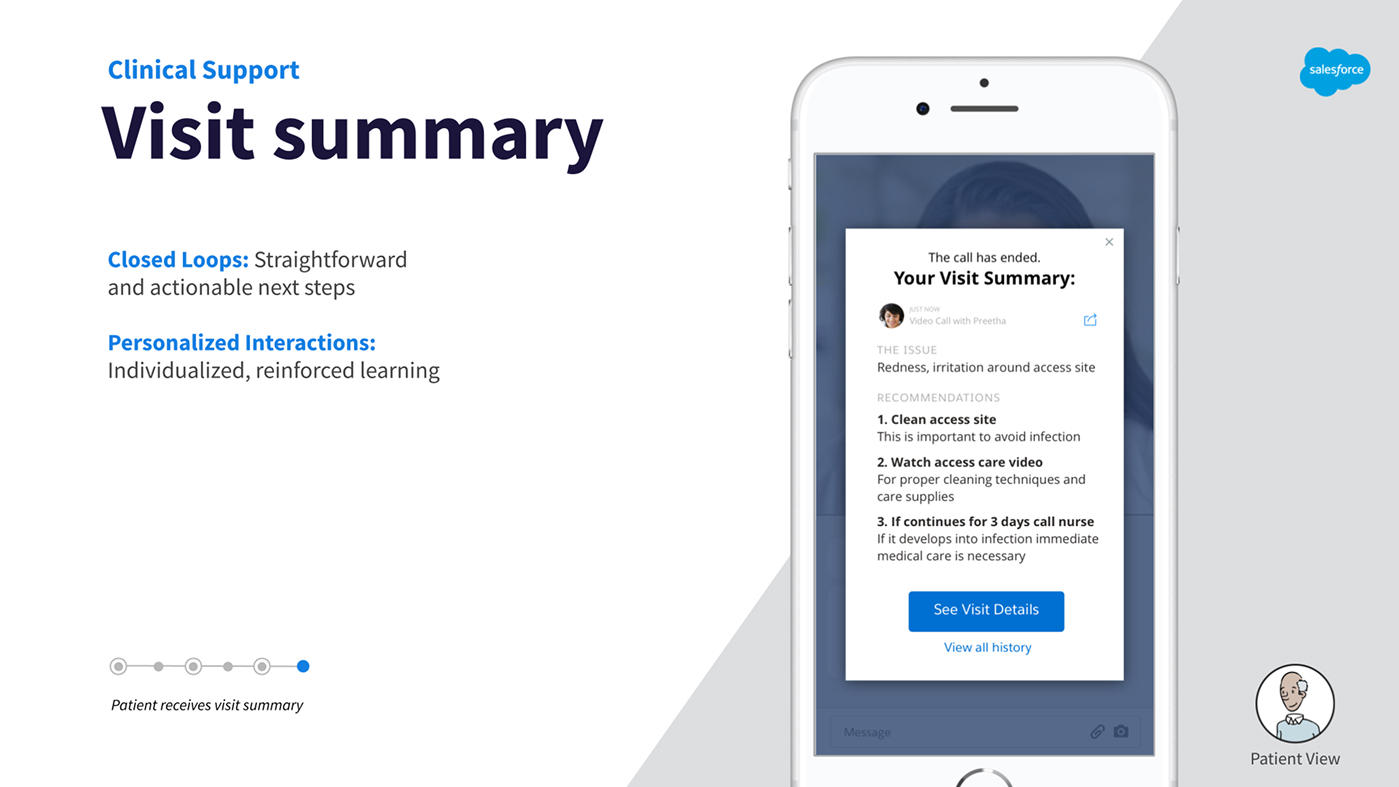
Clinical support
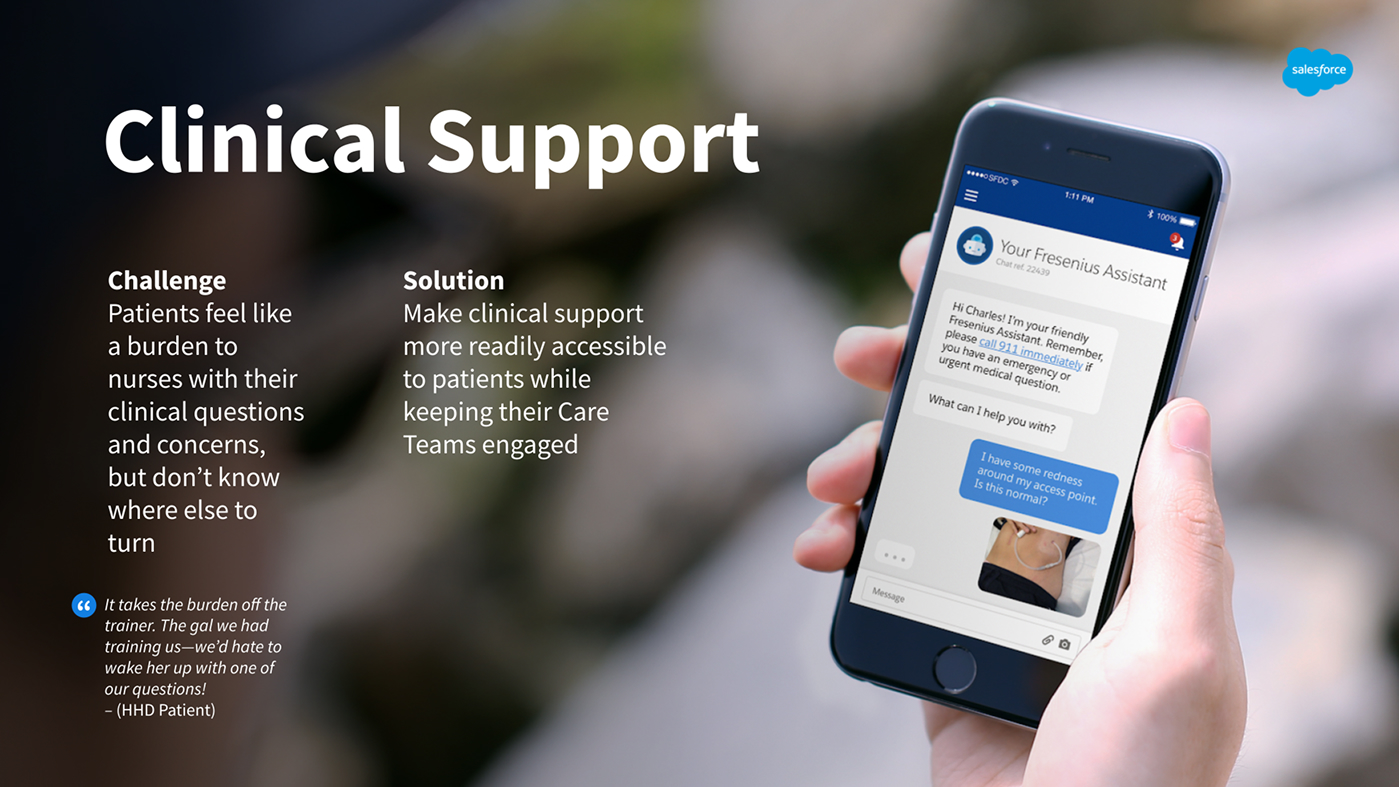
This concept is largely about helping patients get support to answer health questions related to dialysis, like access port infections...(or changing meds, or other assessments about care)
Patients are aware of the burden that their nurse is under and sometimes refrain from contacting anyone when they could have used immediate help.
Clinical support provides an easily accessible...always on support network for patients ...that also keeps patient's care team aware of all interactions.

Outcomes & Impact
The concepts were presented to Fresenius leadership and informed their product roadmap for 2024-2025. The chat messaging feature moved into development and launched in Q3 2024 with initial pilot groups showing:
- 40% reduction in non-urgent phone calls to nurses
- Patient satisfaction scores improved from 3.2 to 4.5 out of 5
- Nurse coordination time reduced by 2 hours per week per patient
Key Learnings
This project reinforced the importance of balancing patient autonomy with clinical oversight. The most successful features weren't the most technologically complex—they were the ones that reduced cognitive load during stressful moments.
Working within the constraints of existing communication center infrastructure required creative problem-solving, but ultimately led to a more implementable solution.