Background
What is Fresenius?
Fresenius provides care and equipment for people with chronic kidney disease (CKD).
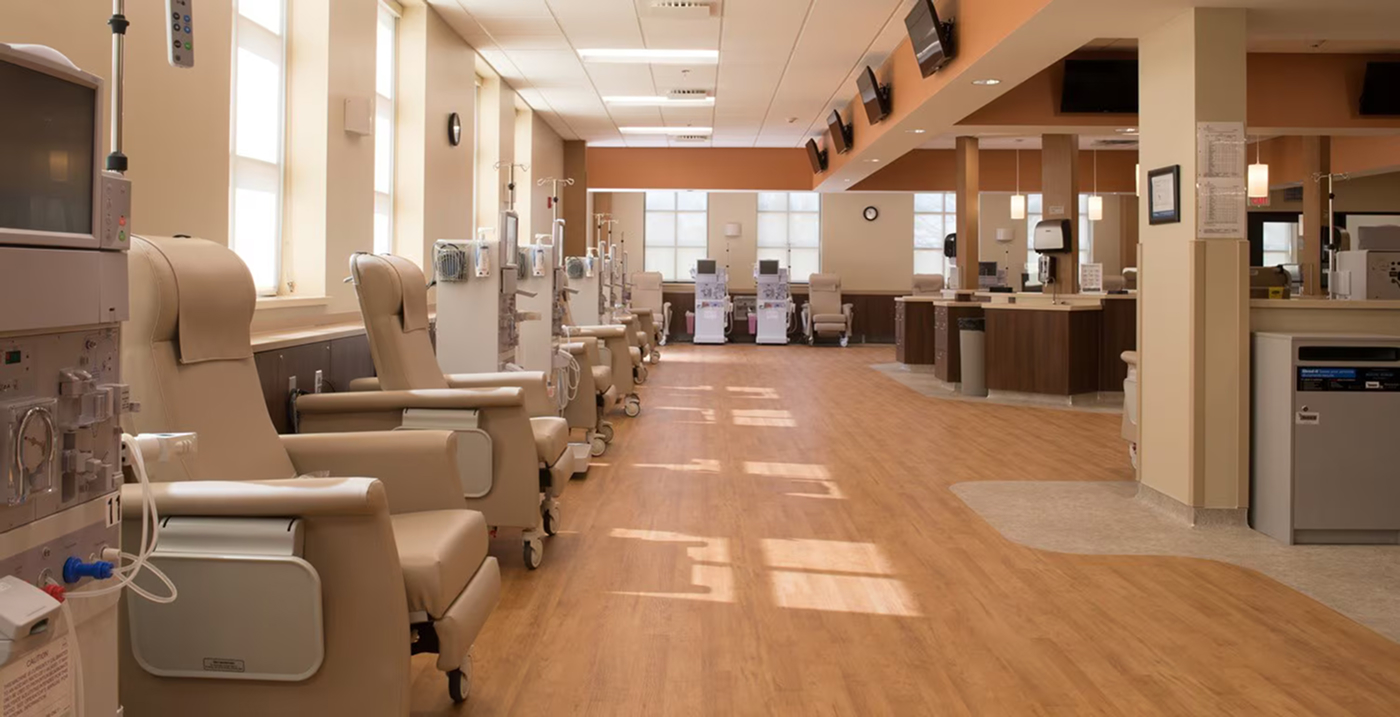
(CKD) patients typically spend 3–4 hours, three times a week, at dialysis centers where machines filter their blood to compensate for reduced kidney function. Fresenius also offers an at-home hemodialysis machine that allows patients to perform these treatments without traveling to a clinic.
This project focused on improving the patient and nurse experience surrounding the use of this at-home system.
The Goal and Challenge
Fresenius set a goal of growing in home care by 25% in 5 yrs and came to Salesforce for help creating the experience for patients and nurses surrounding in home care that would enable that growth
However, they had a big challenge: about 1/2 the patients that try in home hemodialysis go back to in clinic care within a year. Fresenius would also need hire more than the amount of available nurses in the US to care for the increase in patients at current nurse workloads.
Getting started
Understanding dialysis dynamics
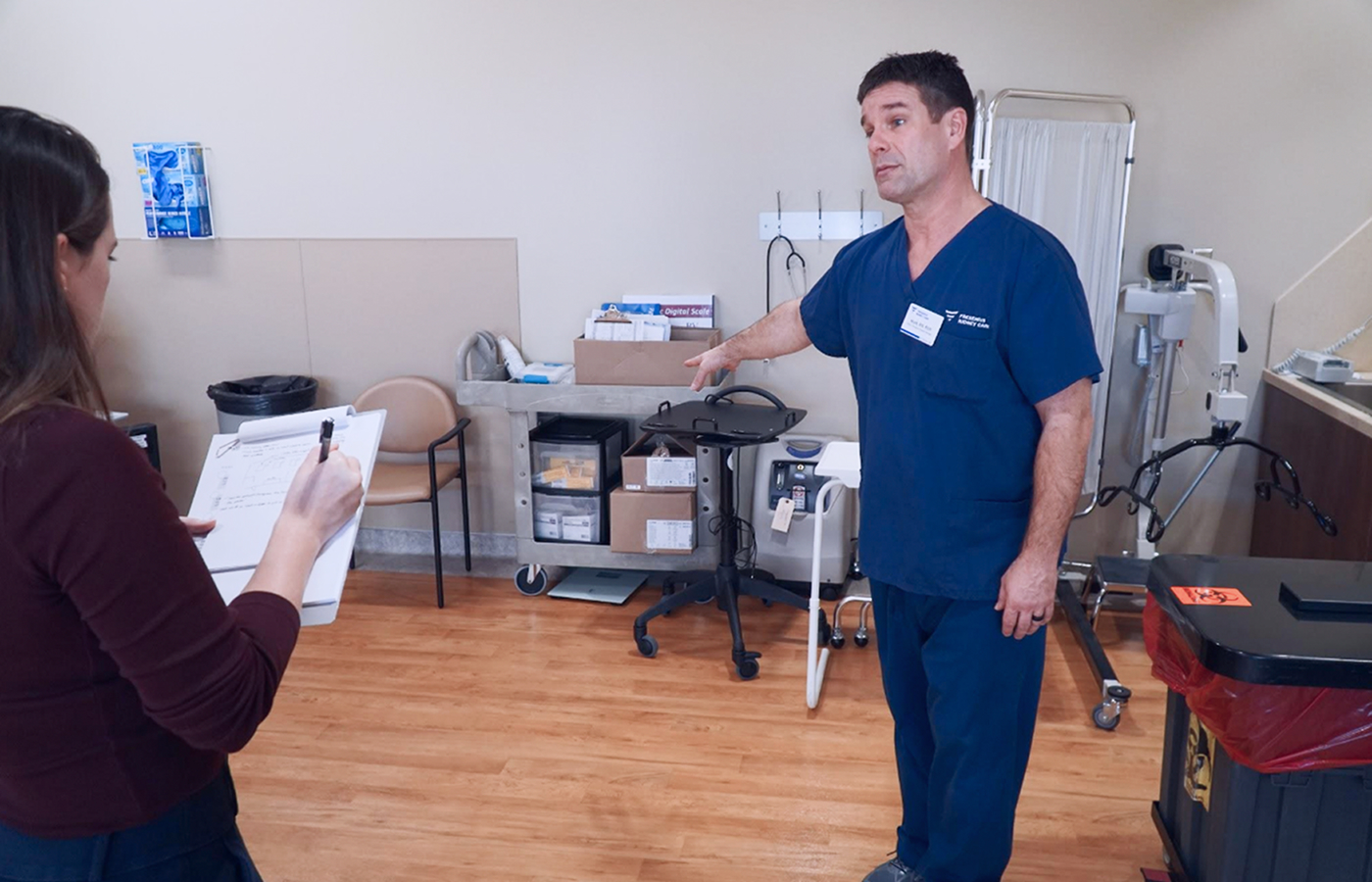
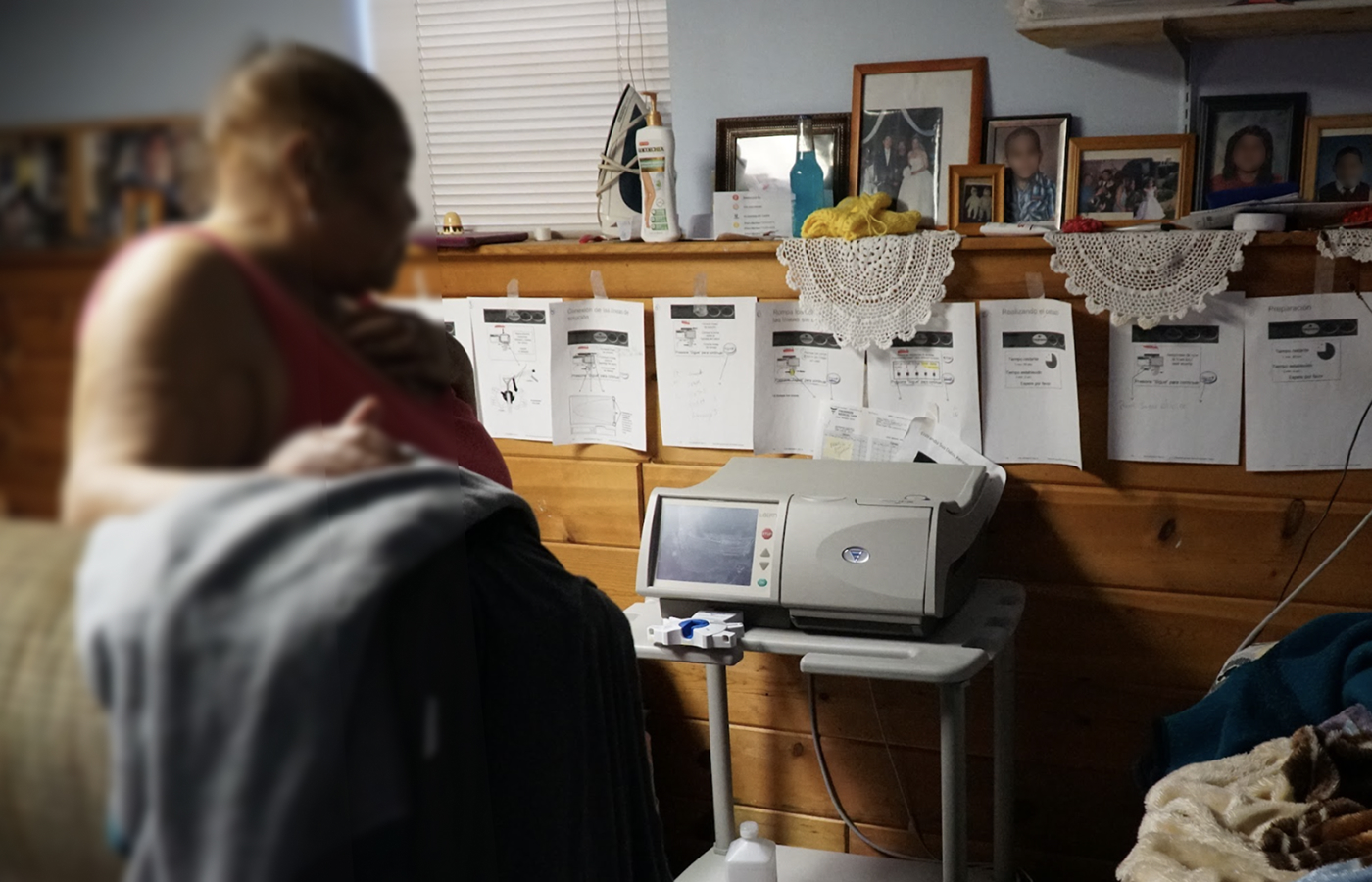
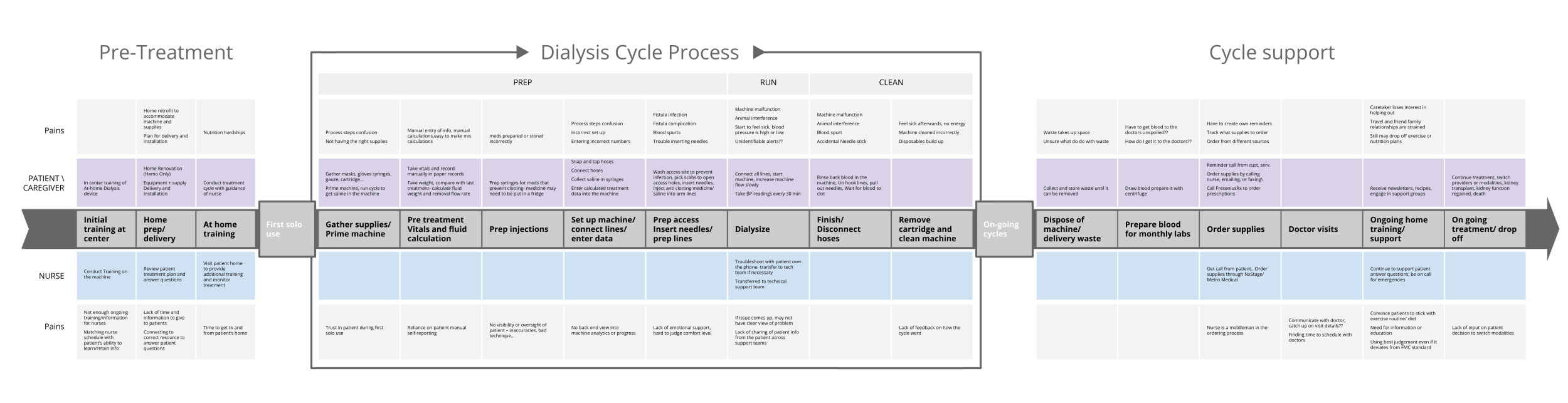
Our team got up to speed by reviewing hundreds of Fresenius documents and internal research showing their current understanding of the challenges. We also conducted our own patient and nurse interviews to get a firsthand perspective beyond what Fresenius had already captured.
Defining the focus
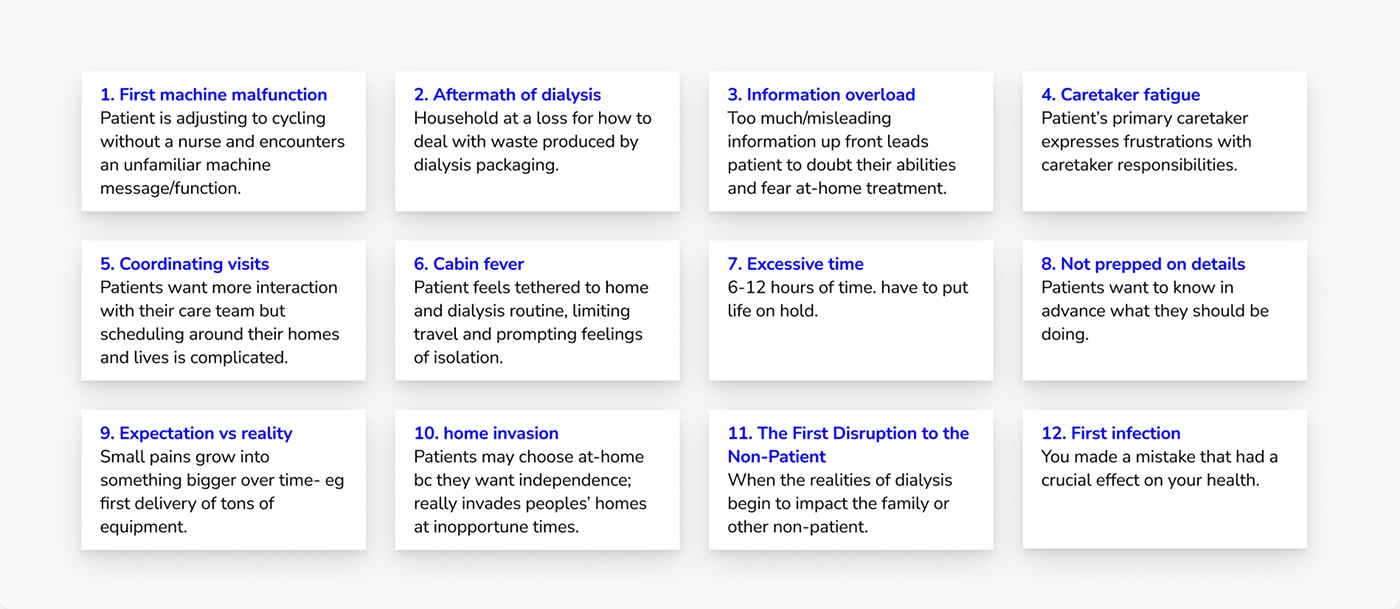
The entire dialysis process is full of pain points for both patients and nurses, so we had to narrow our focus to what we could feasibly solve. We combined primary and secondary research to create cards describing the pain points we thought were most important, then worked with the Fresenius team to add others they had identified.
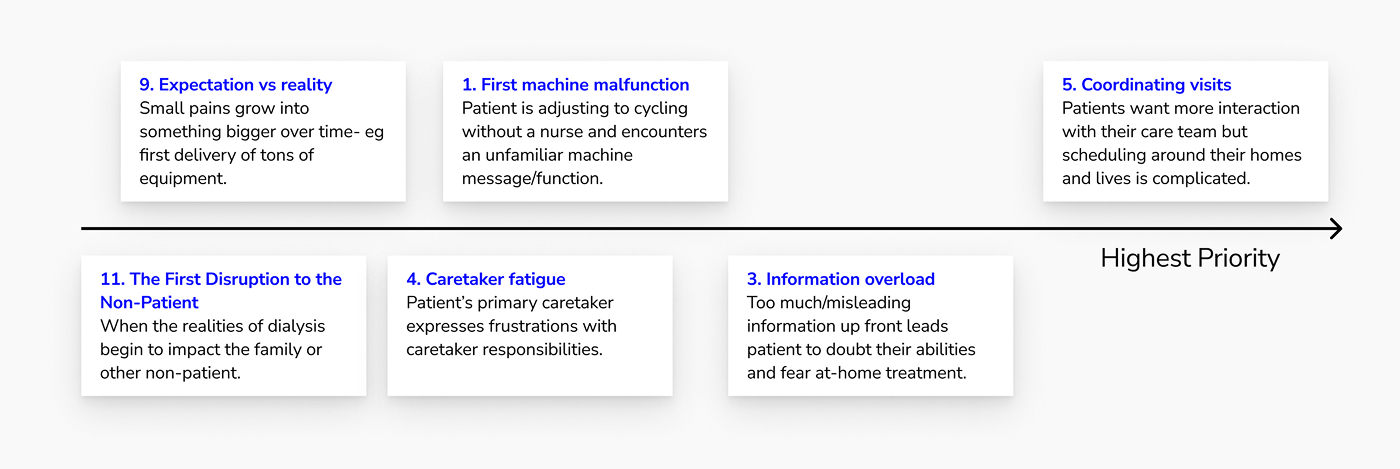
We sorted the cards on a priority scale to identify where the highest-priority pain points were, and where we should focus our efforts.
Co-creation
Sprinting
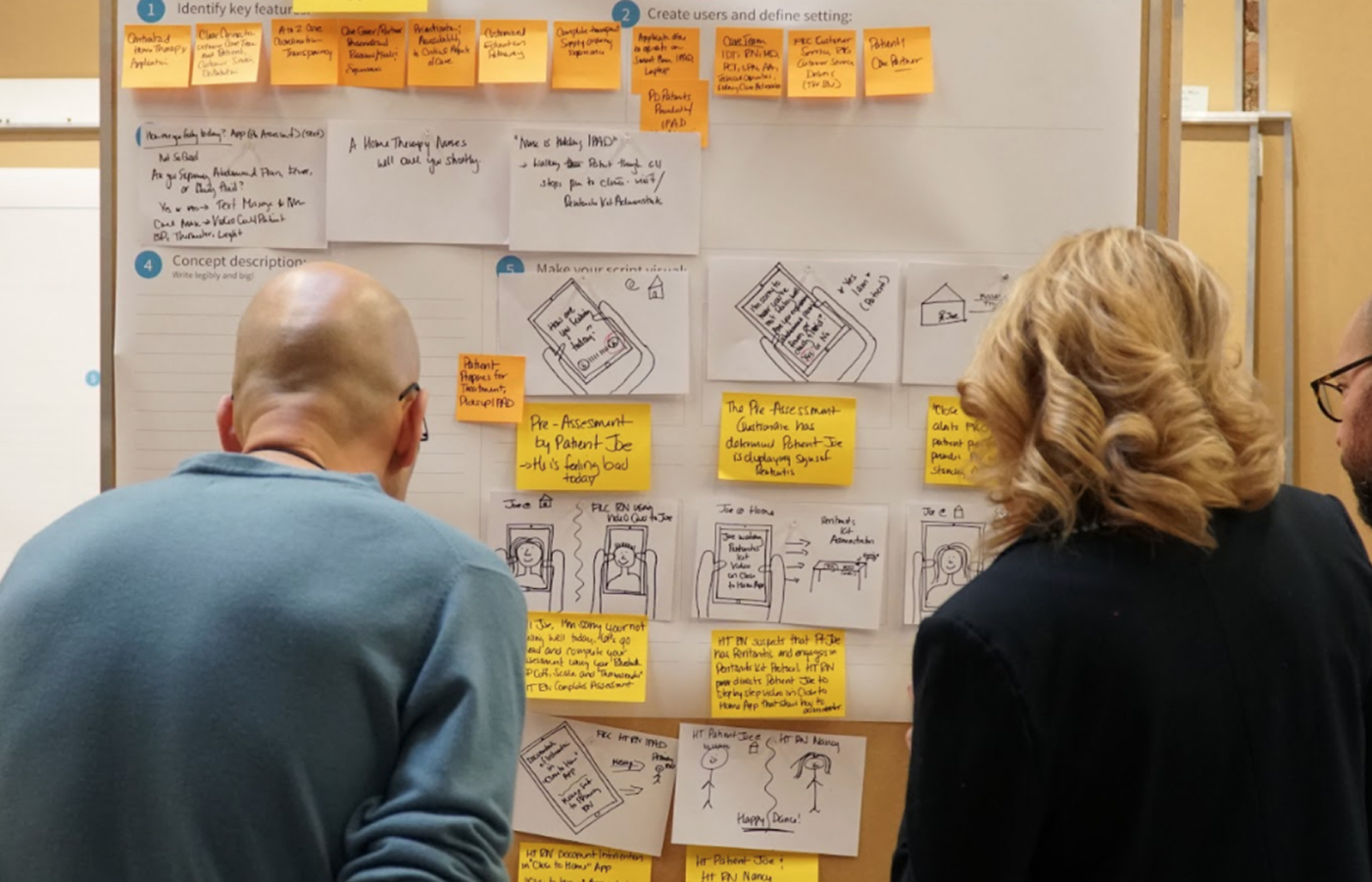
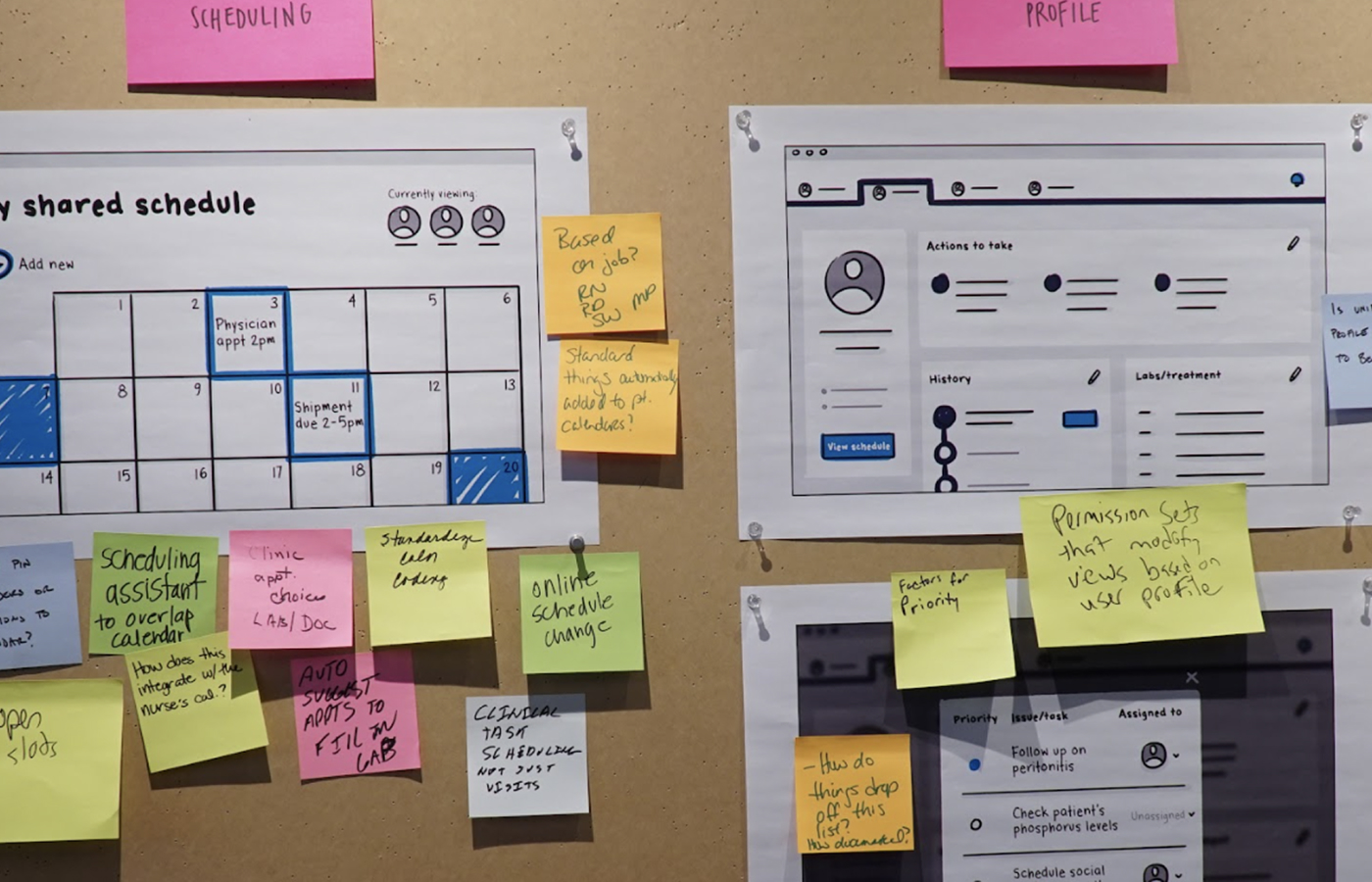
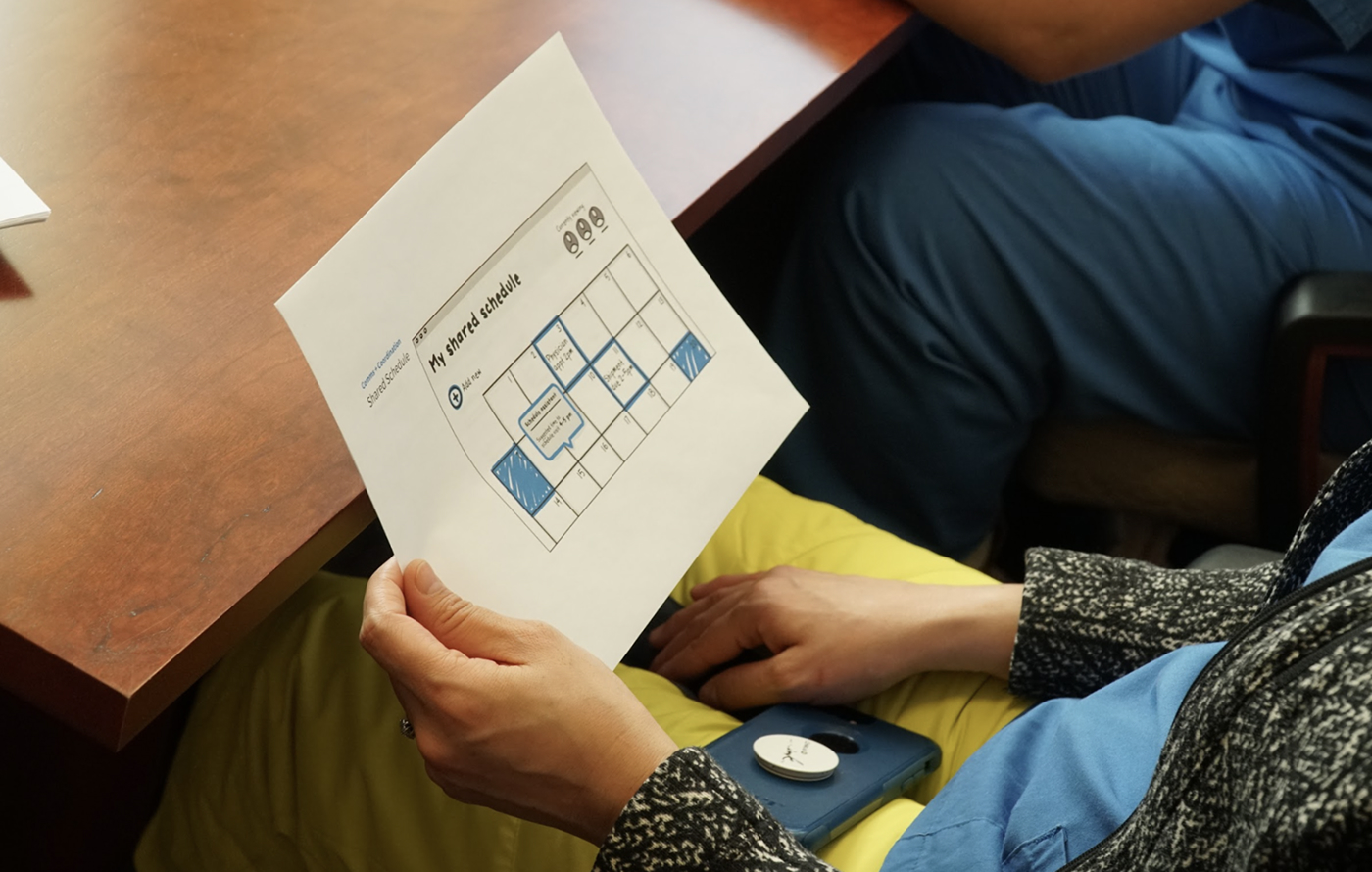
After the initial research, we designed a one-week sprint to make progress quickly in collaboration with the Fresenius team. The week included research review, concept creation, and patient and nurse feedback sessions.
But what about the burden on nurses?
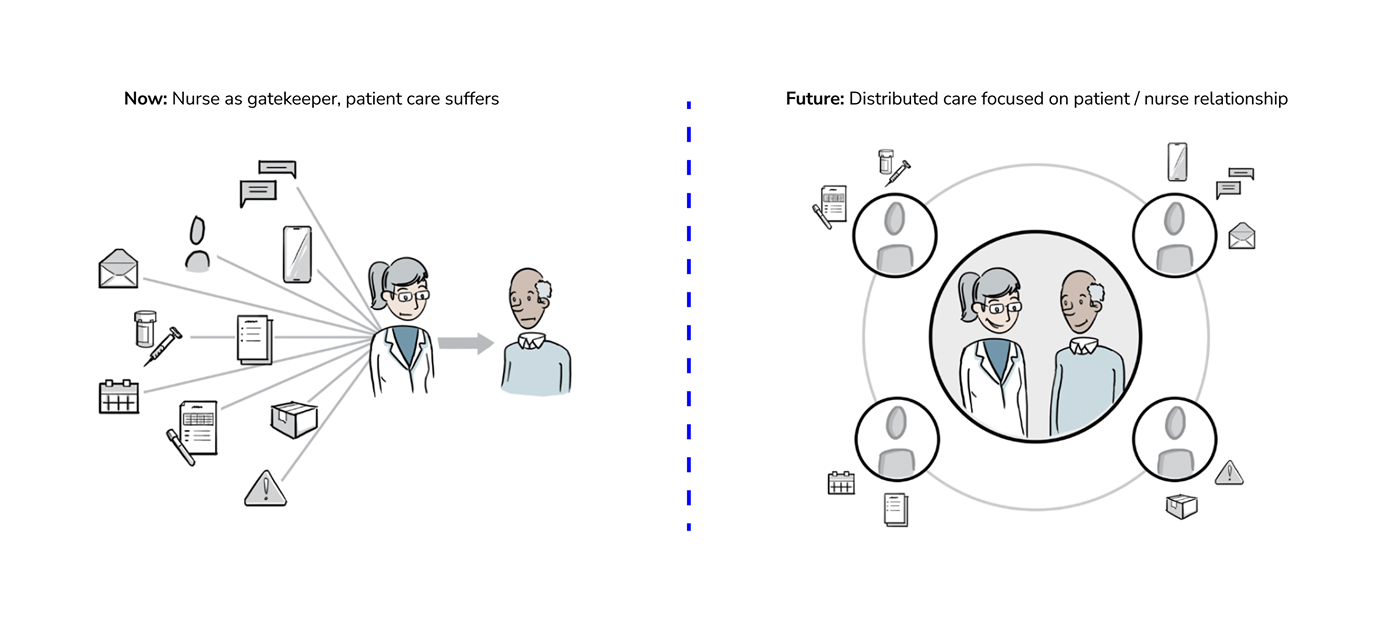
Through early research and the sprint, we aligned on a critical insight: no solution would work without rethinking how patients interacted with their care team. Nurses were already at their breaking point managing every interaction, from ordering supplies to scheduling visits to direct patient care.
For any solution to work, the extended care team needed to work closer with patients to reduce the burden on nurses. Patients needed to connect with and trust the extended care team members, and for that to happen, the care team needed to understand the needs of the patient and have the right information about them.
Concepts
Along with the organization of the care team, three solution areas became most important for improving the at-home experience:
- Education: Providing easy access to the information patients needed
- Coordination: Enabling care team members to stay on top of patient preferences and personal information, so if clinical support staff checked in with a patient, their nurse would know about it
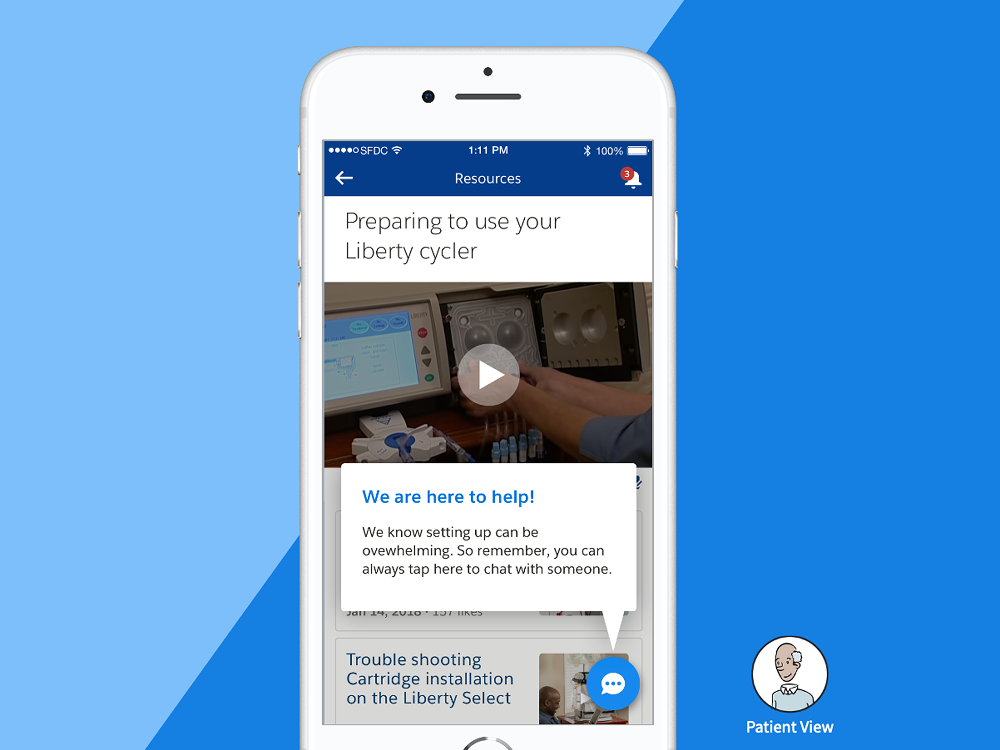
- Virtual support: Allowing patients to access help from home whenever they needed it
Further focus
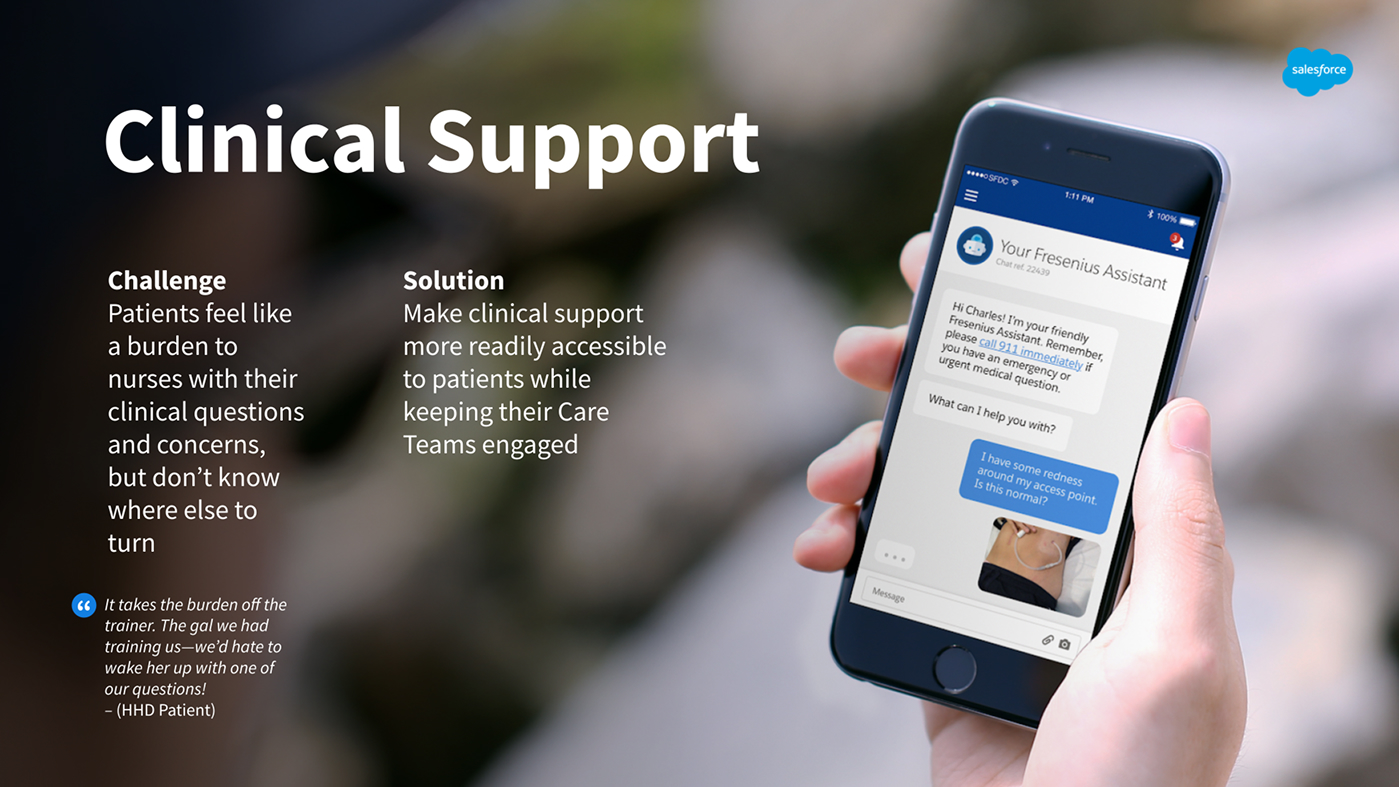
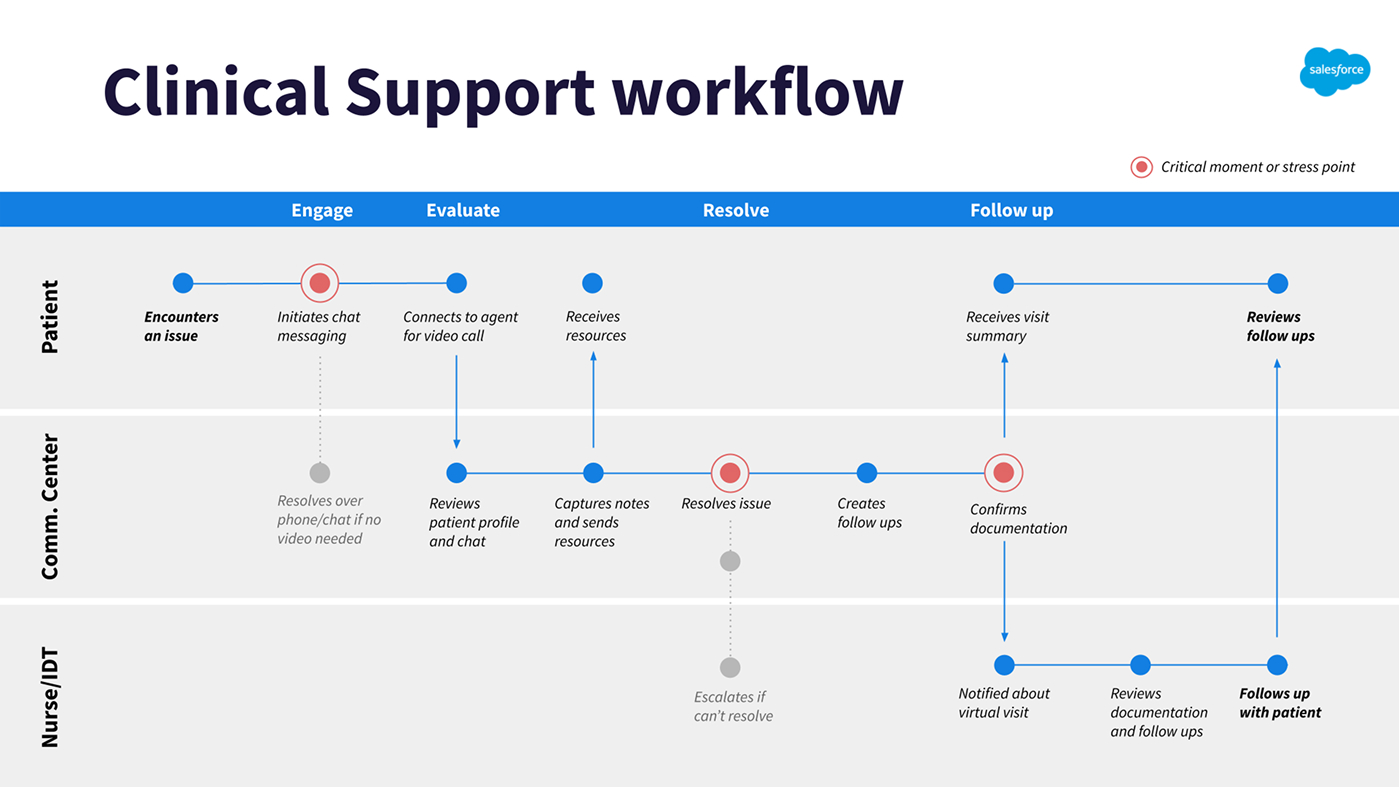
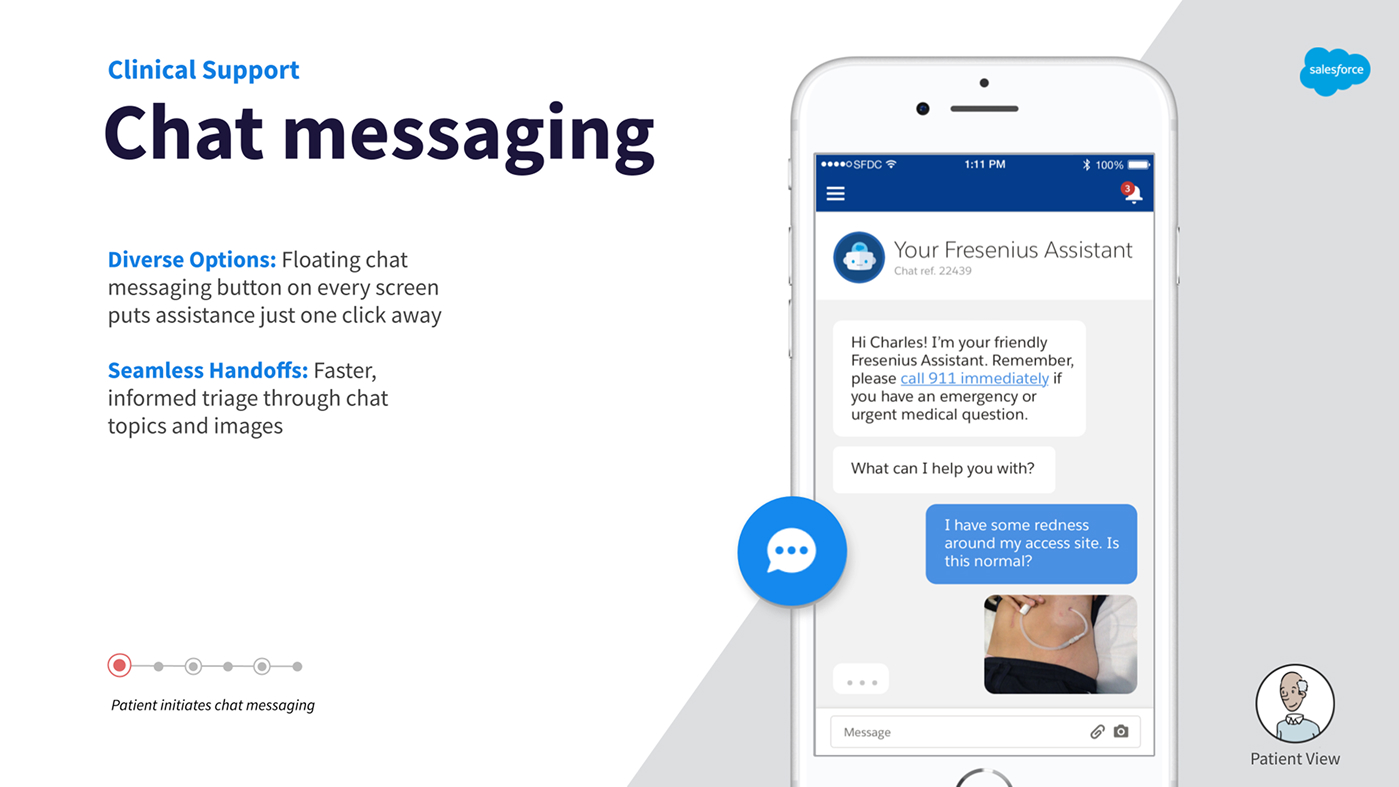
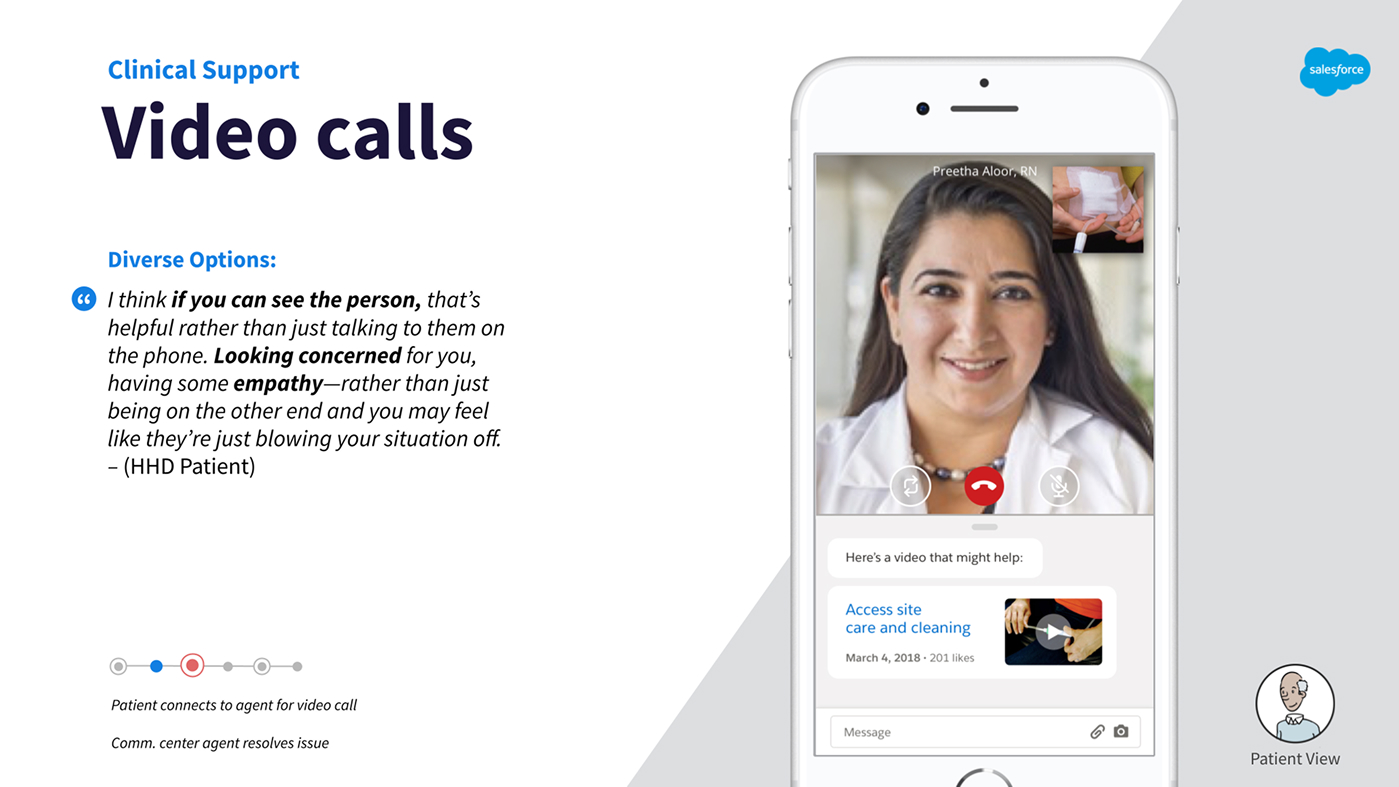
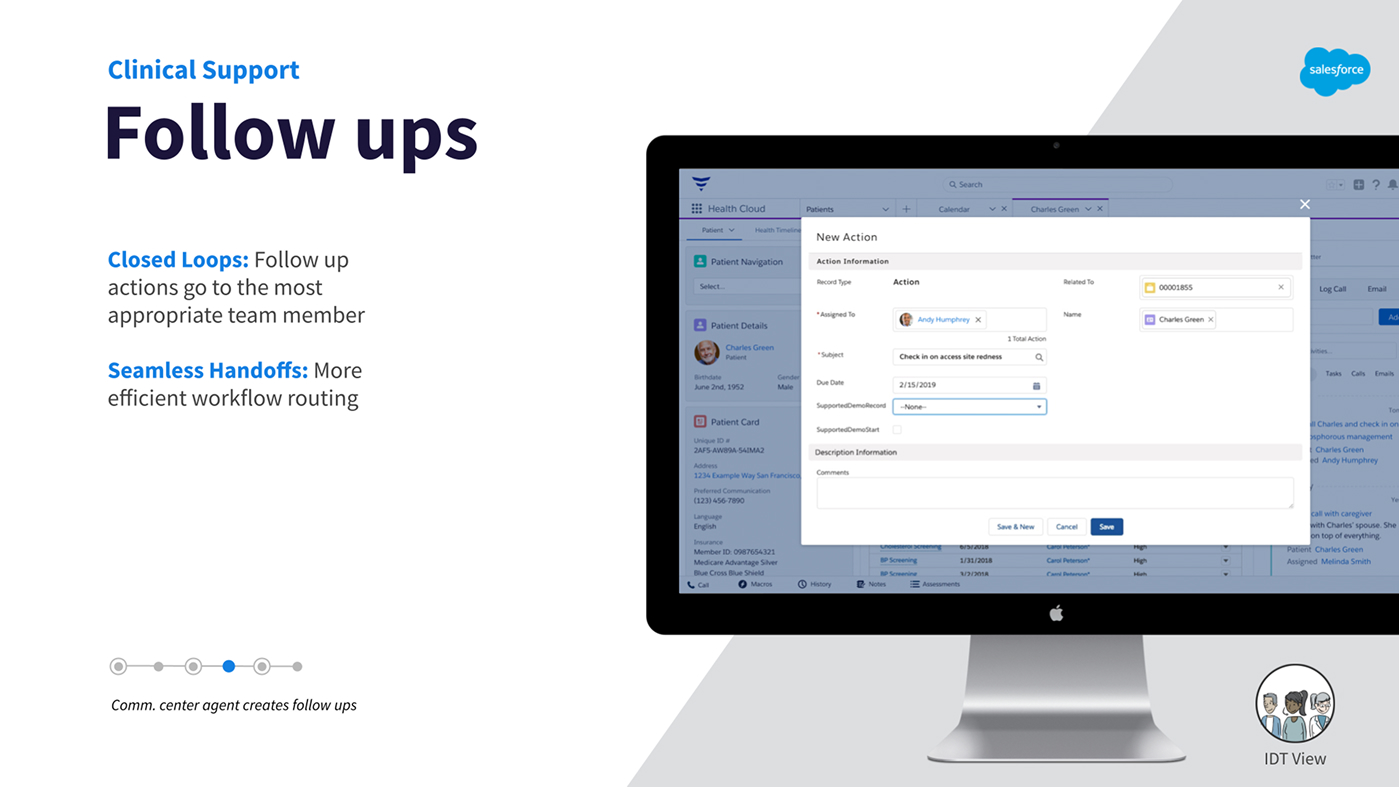
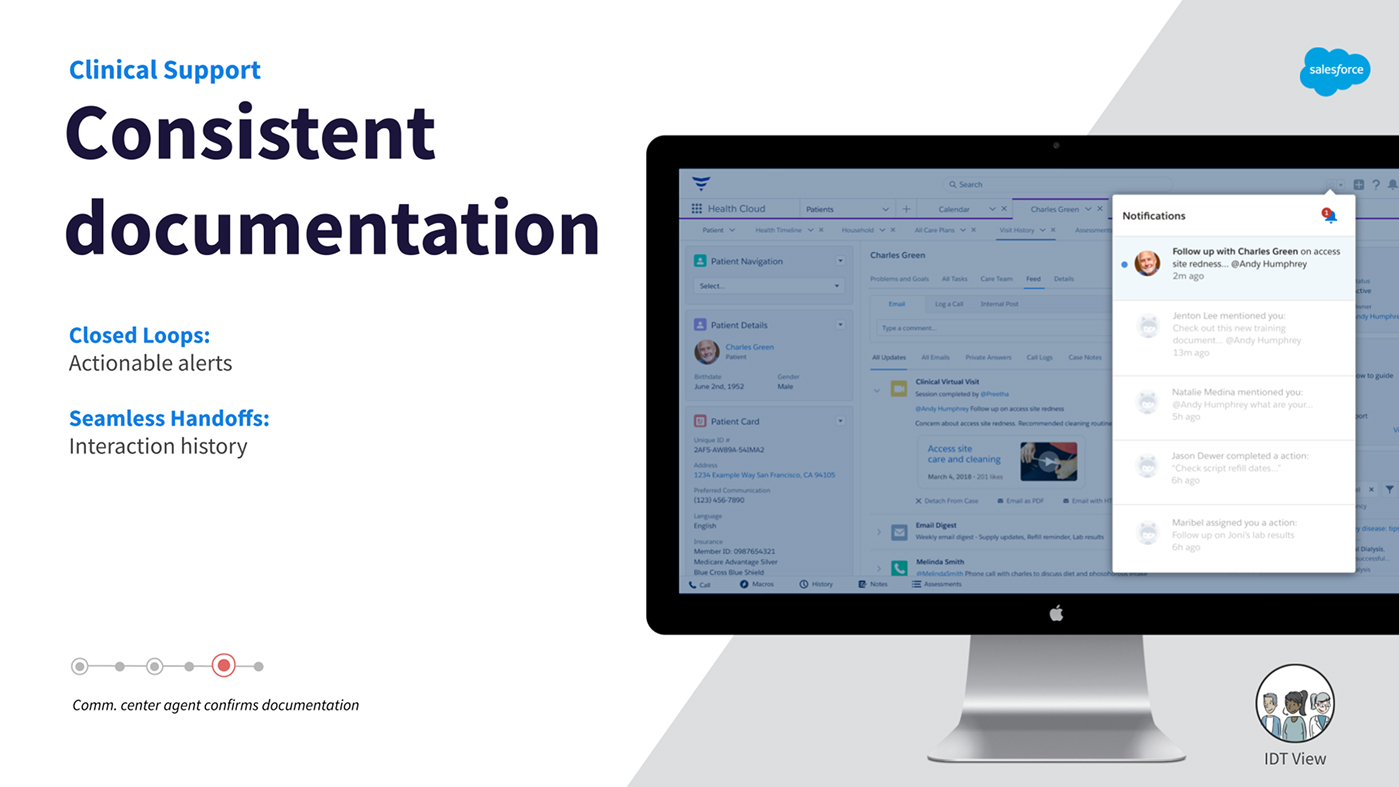
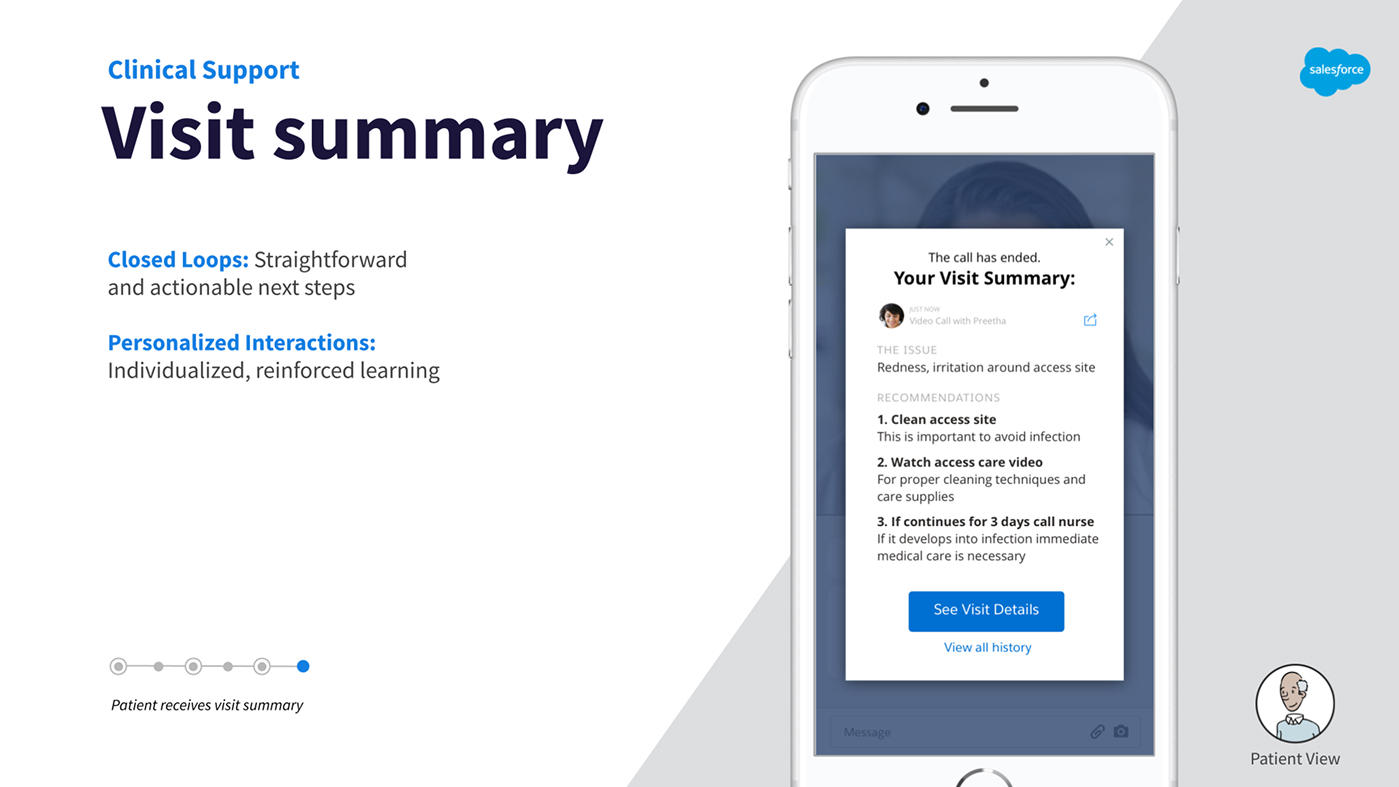
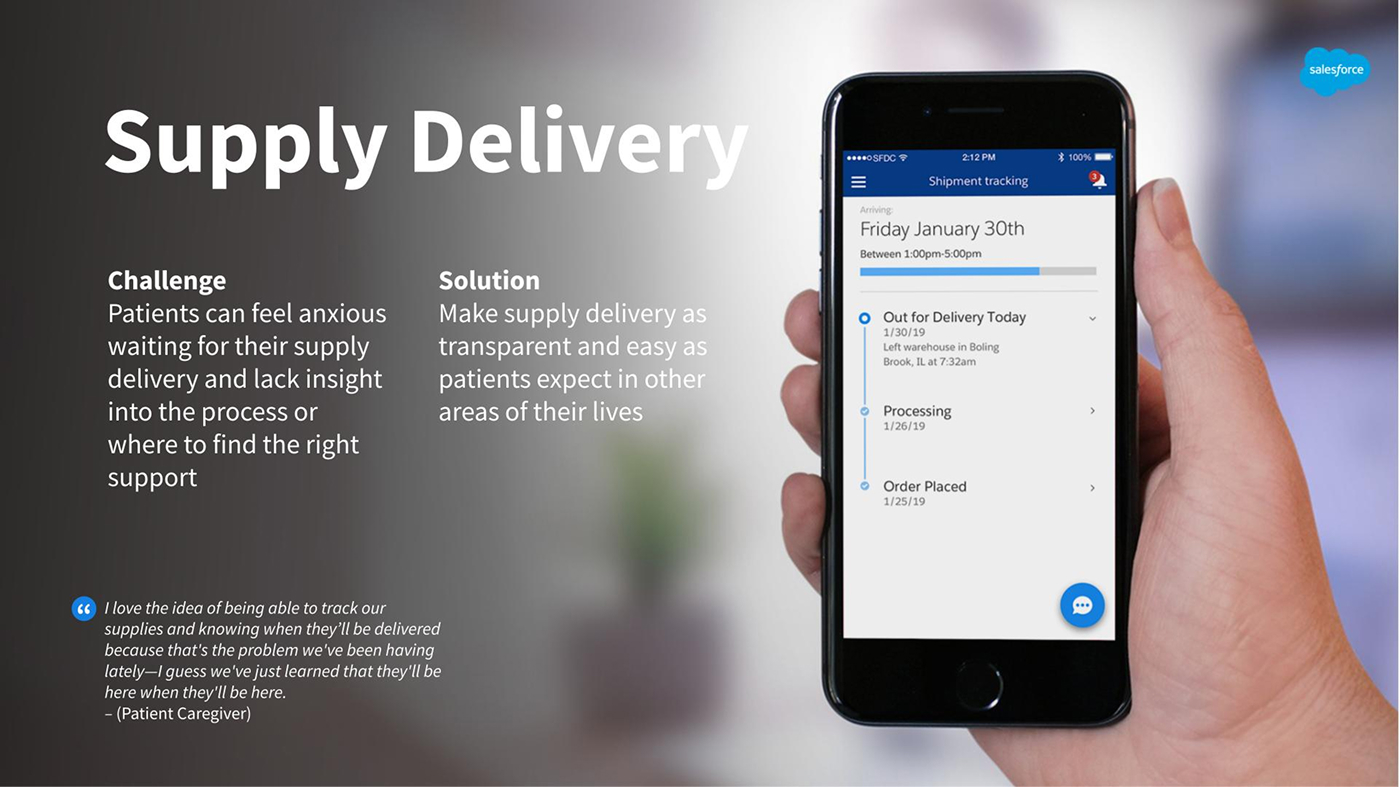
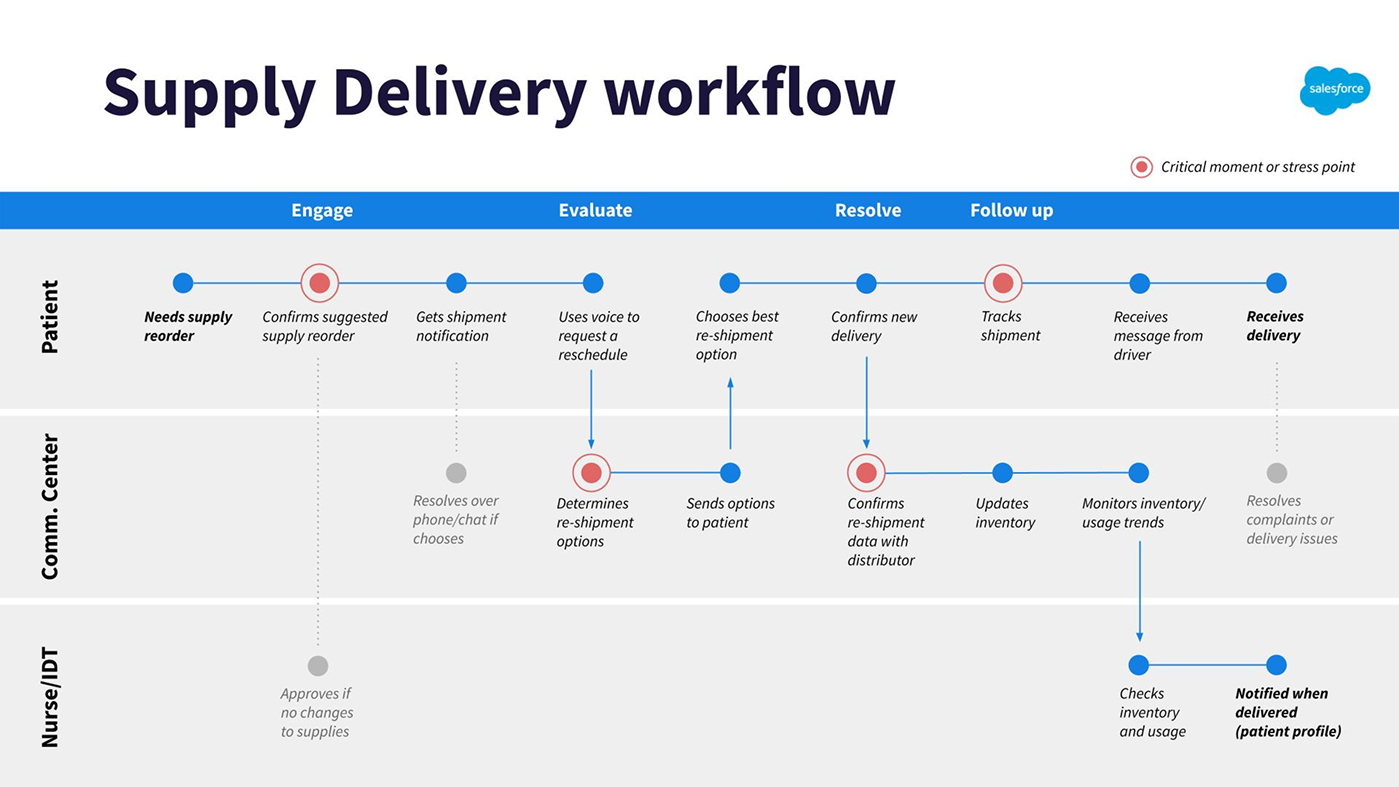
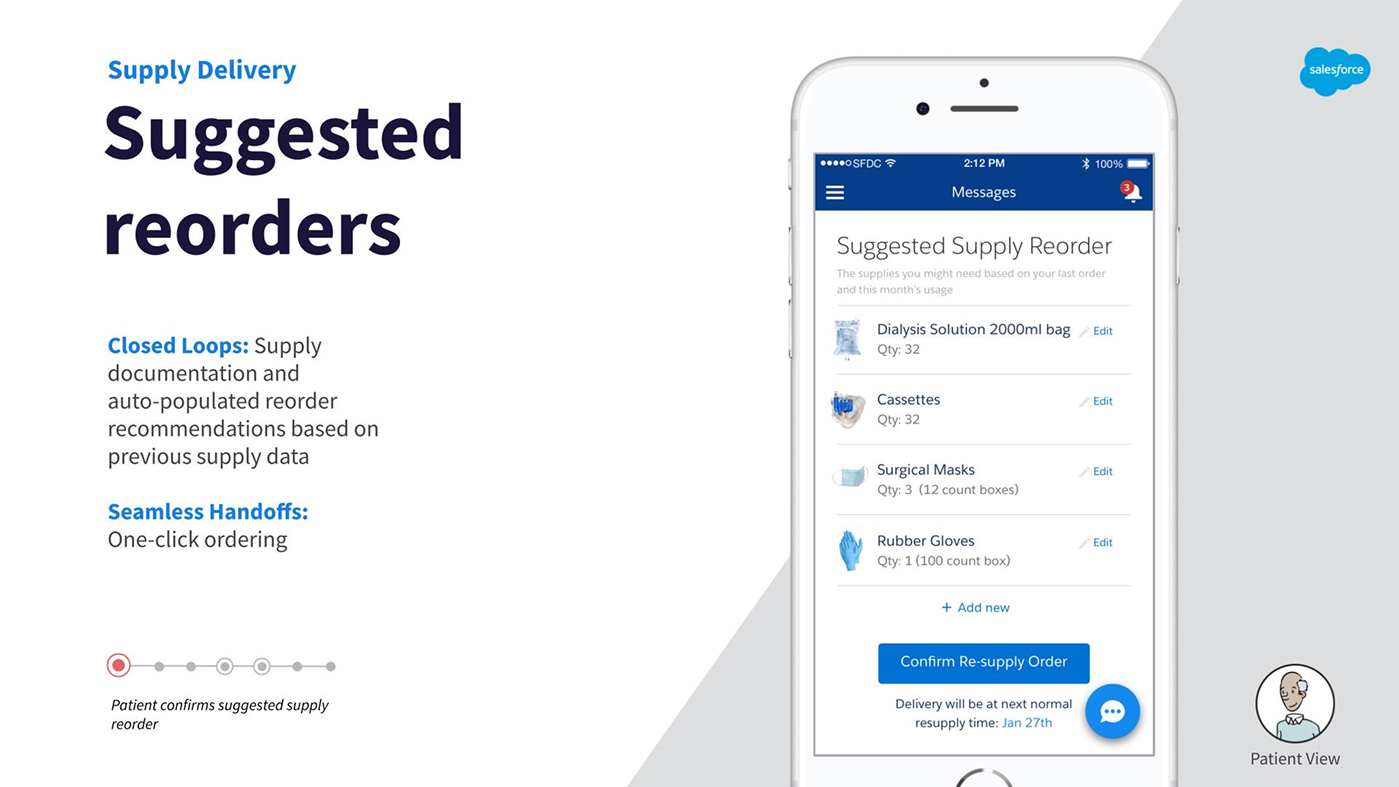
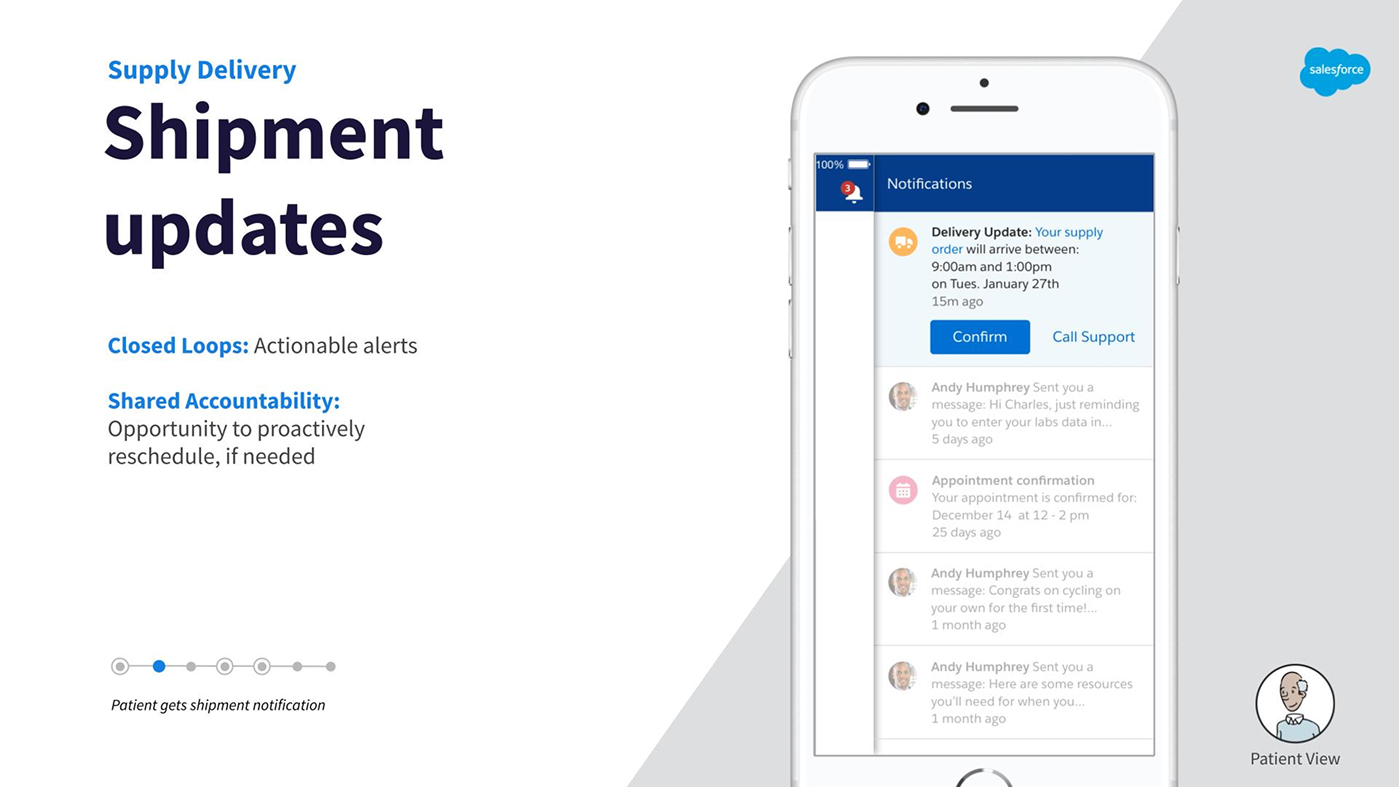
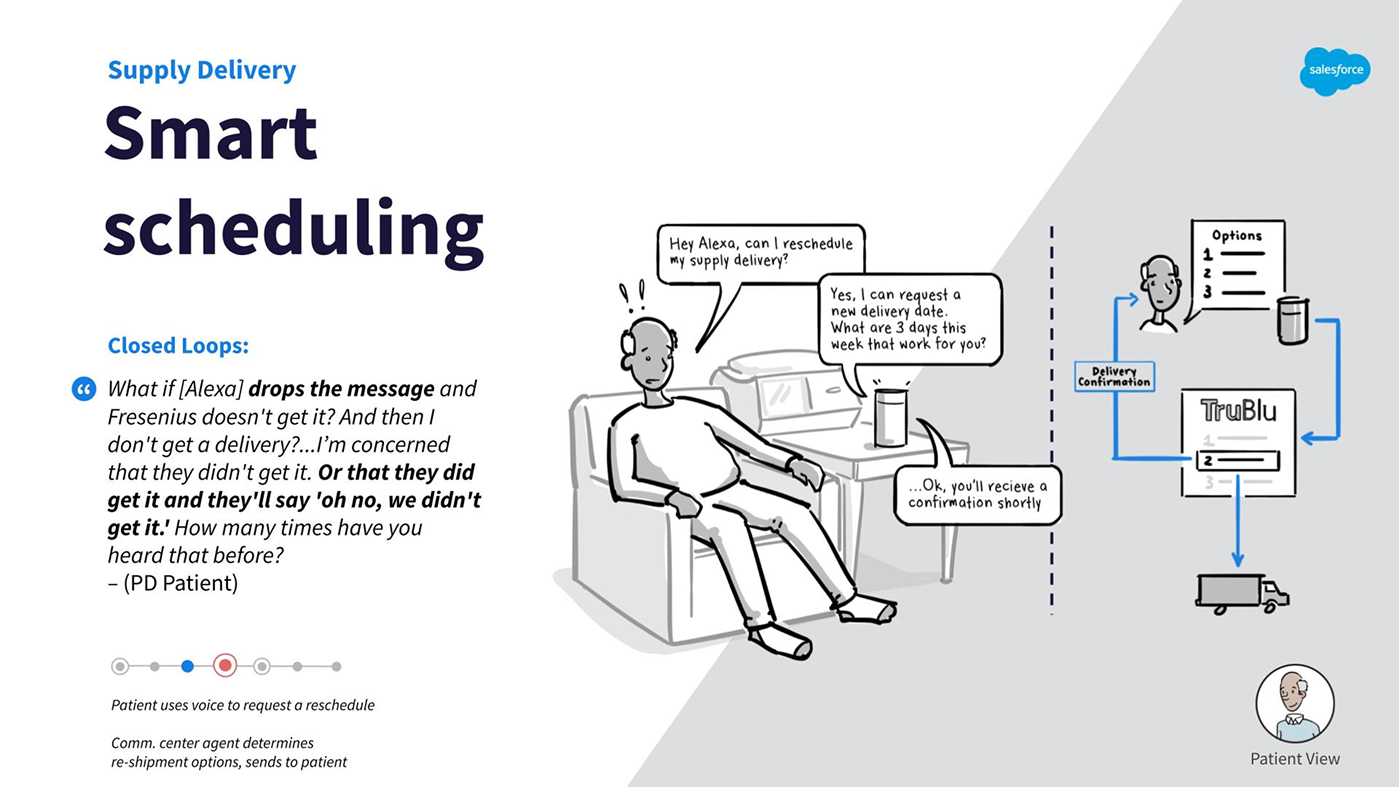
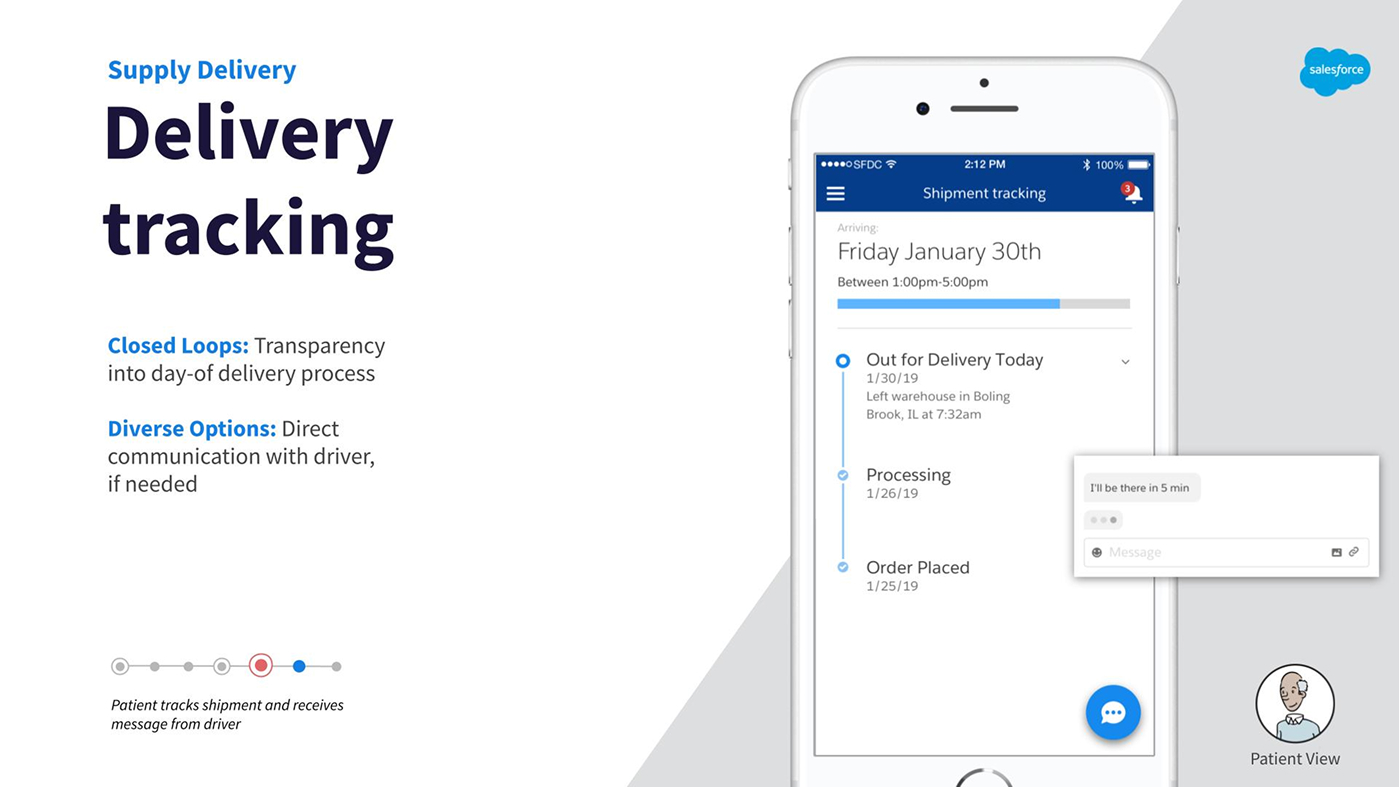
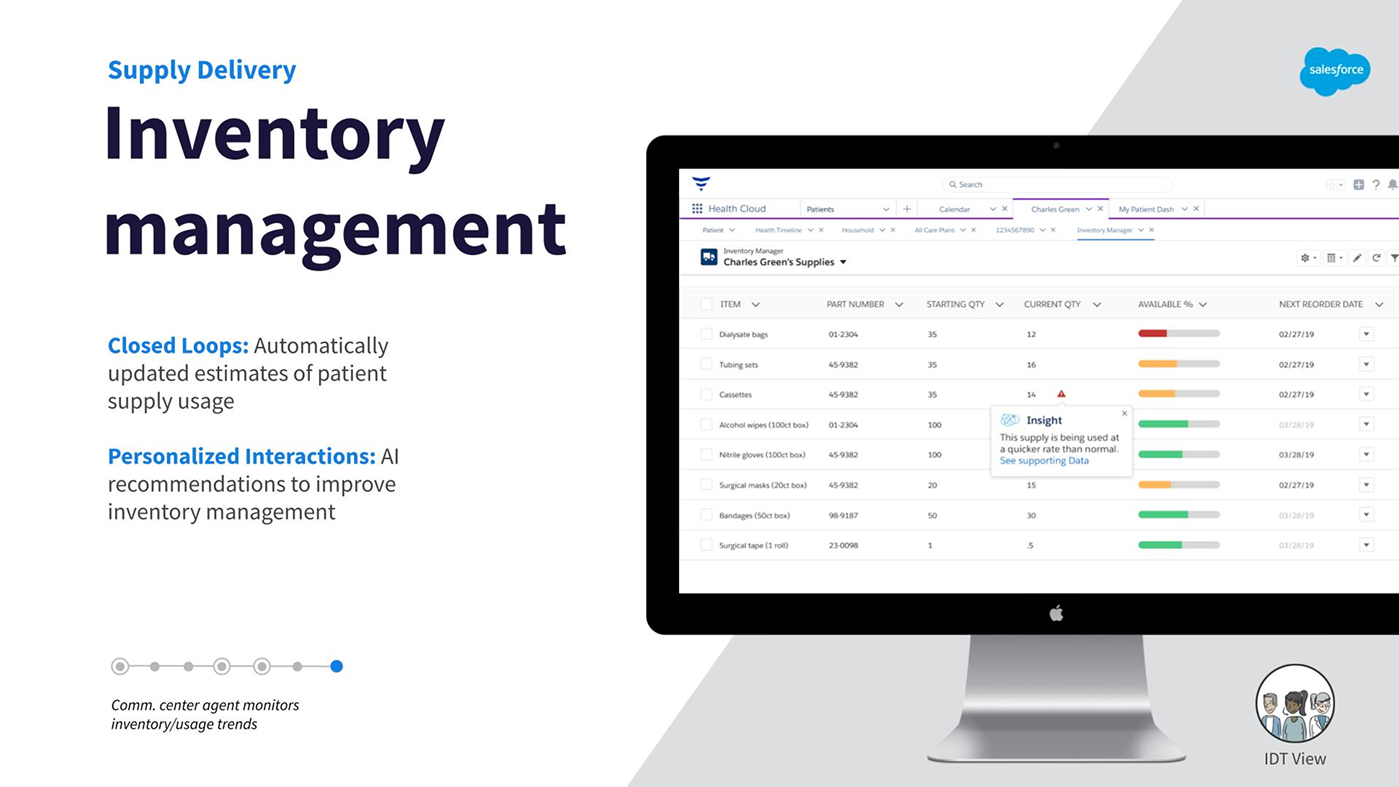
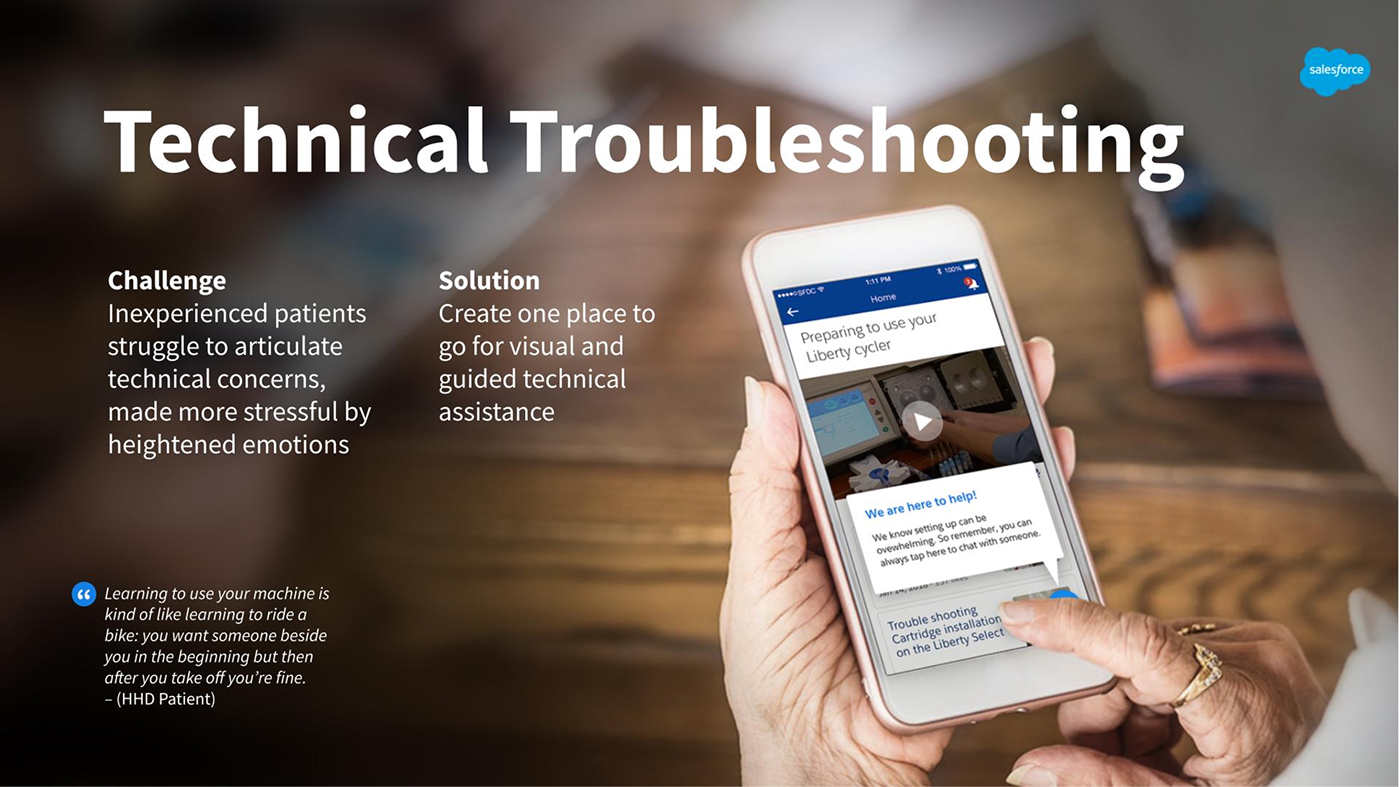
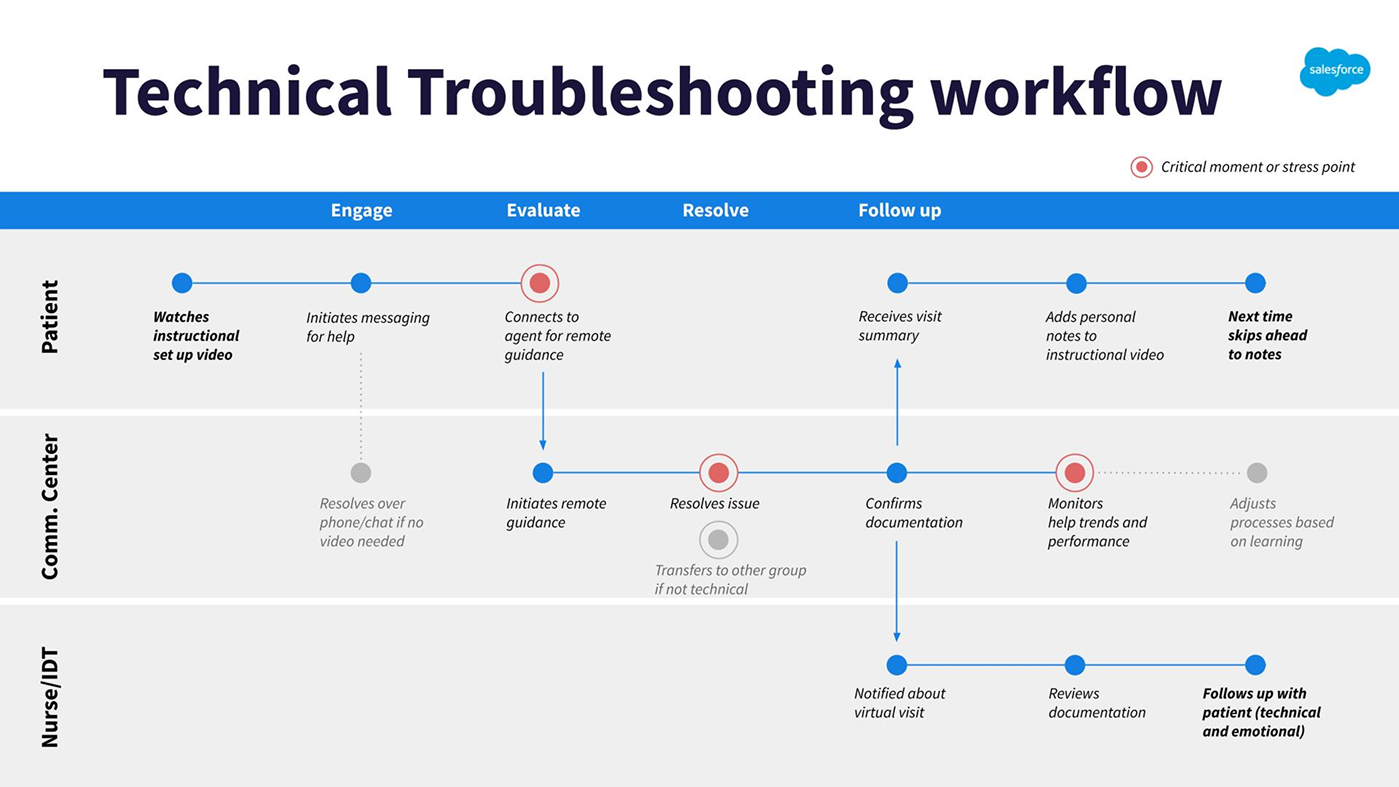
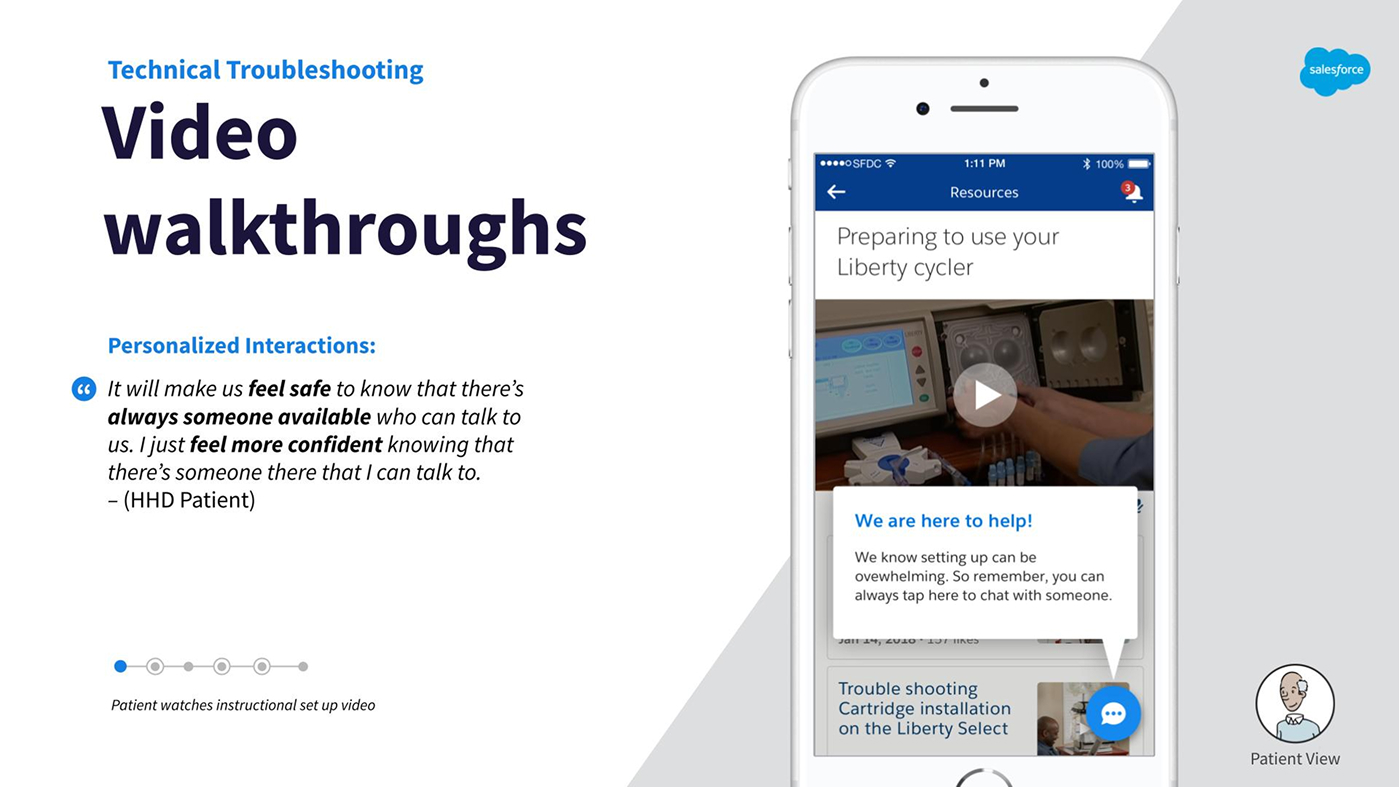
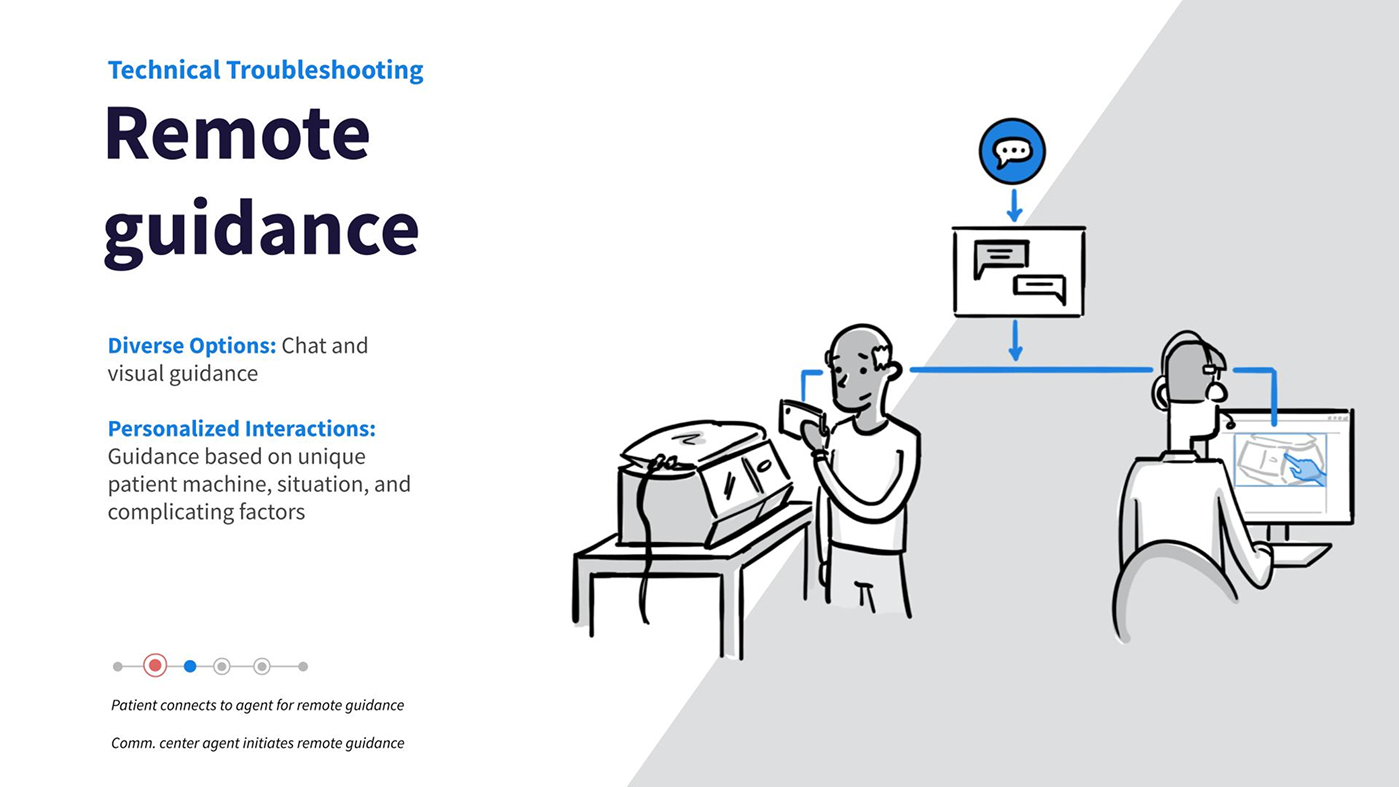
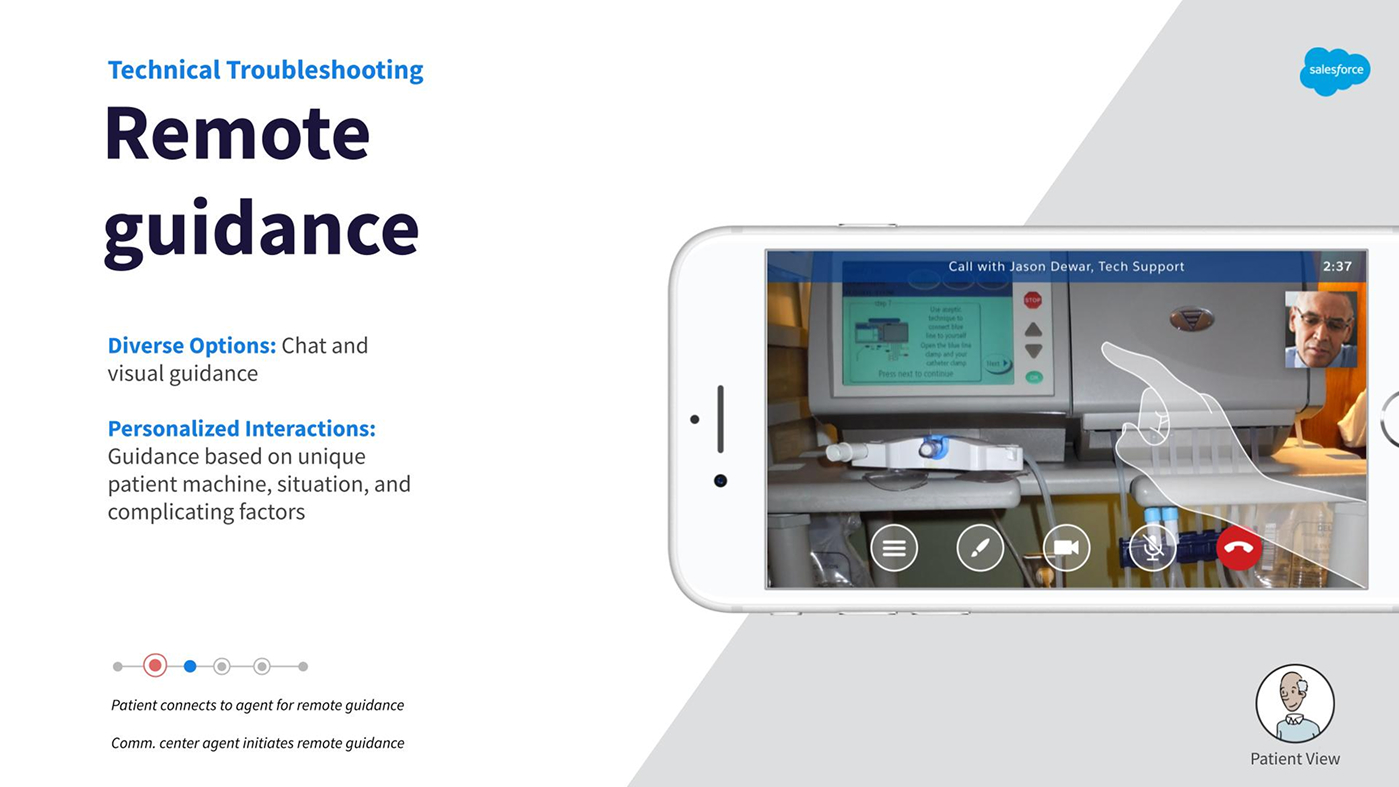
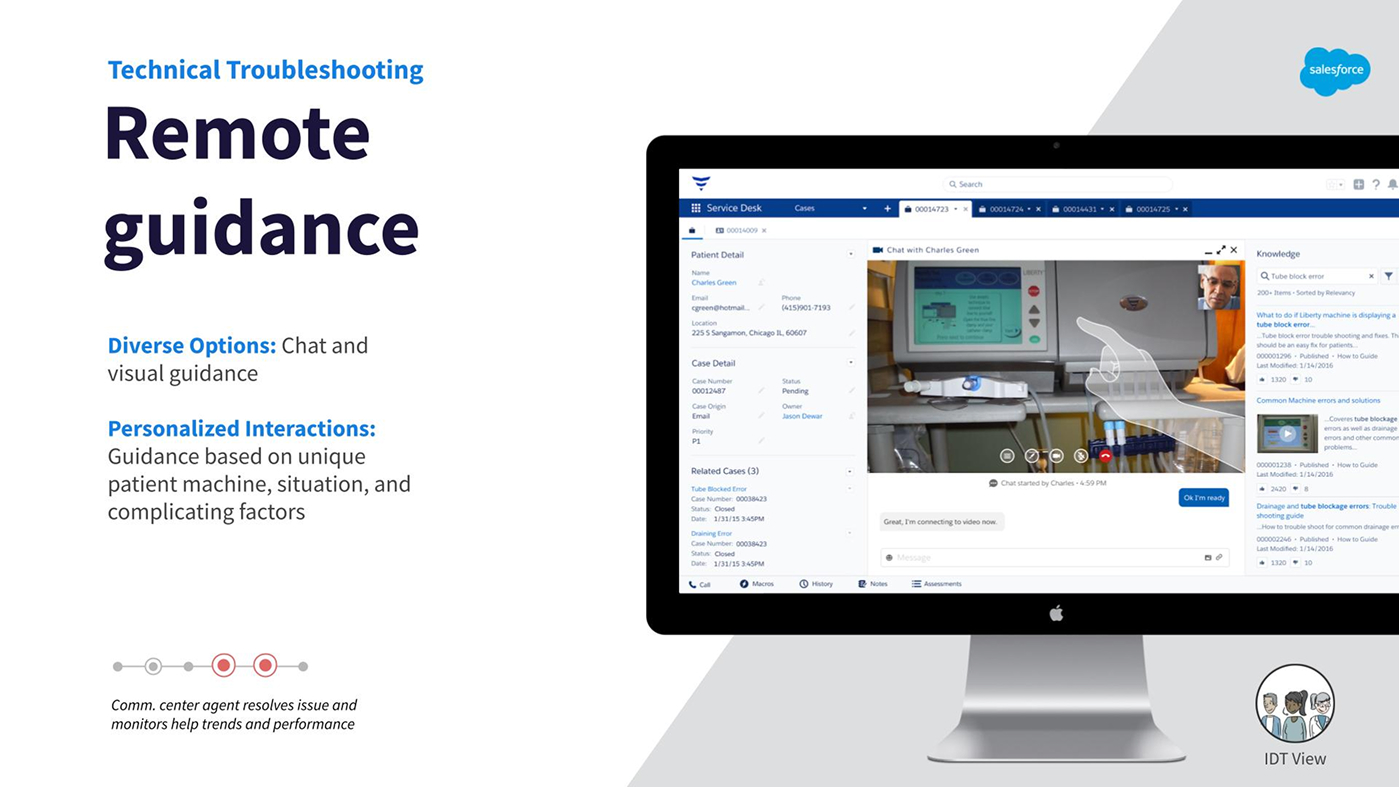
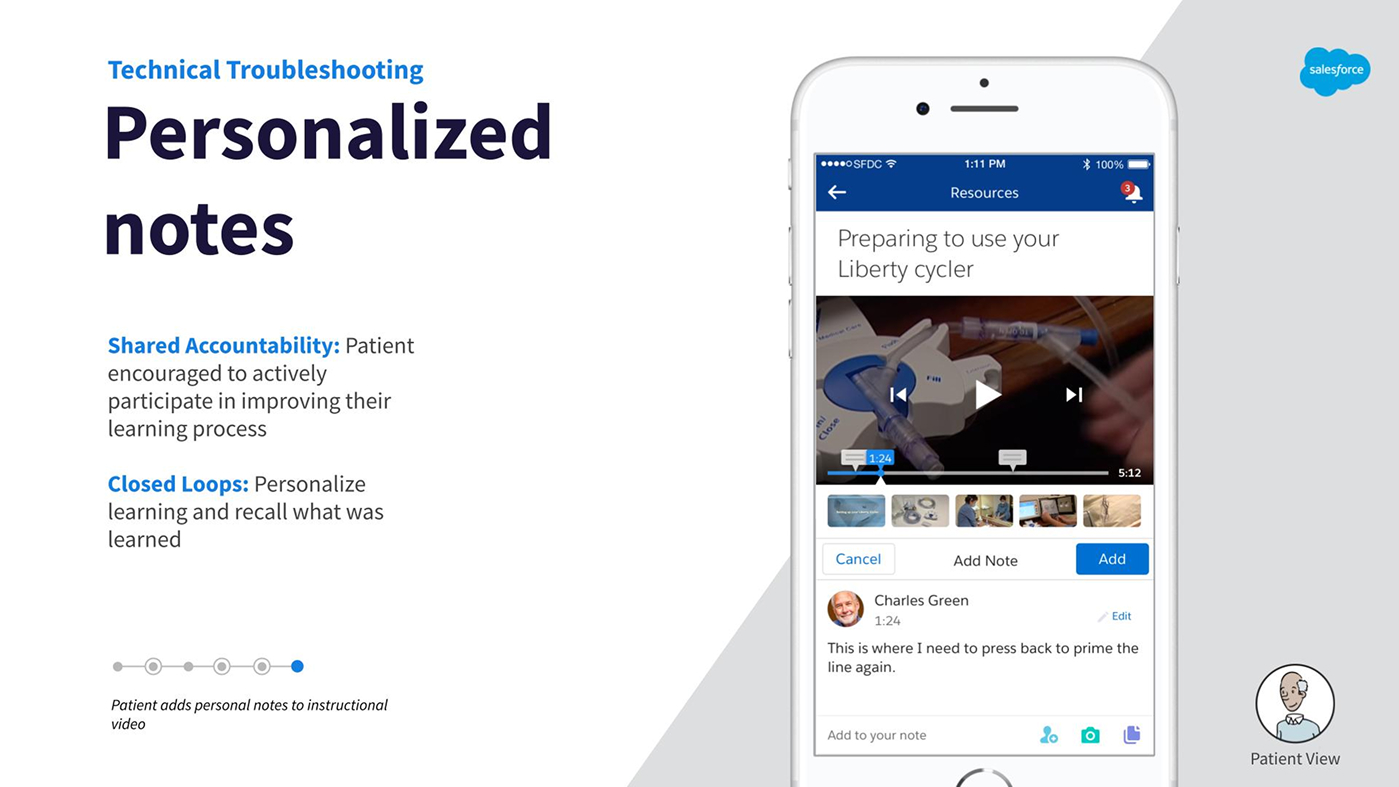
After the sprint, Fresenius leadership chose Virtual Support as the sole focus, since it was most aligned with patient needs, business goals, and current initiatives. They were committed to building out a centralized communication center. Through additional feedback and patient research, we built out Virtual Support into three in-depth areas: clinical support, supply delivery, and technical troubleshooting. Each had its own set of features and workflows showing the process for support and who would be involved at each step.
Results
We received a 10/10 CSAT score from both the director of product and VP of operations.
The work shifted Fresenius’ strategy: they invested in proof-of-concept projects with Salesforce solution engineers and shaped their support center solutions based on our recommendations.
Salesforce teams adopted our work as a model for user research on complex healthcare workflows.
“Best hands-on research I have seen!”